AVIATION MISHAPS - INDONESIA
The Indonesians are caught between the devil and the deep blue sea. The cheapest way to get around the 17,500 odd islands that make up the country is by using the ferry service (ships plying the Indonesian seas). Now, we all know from the rather distressing frequent news of ferry disasters in Indonesia killing hundreds of people even last month and that is not the greatest way to travel. So, the next best option to travel (the only alternative means of transportation, I may add) is by air of course.
However, the year started off with two accidents/incidents related to Adam Air's Boeing 737's already (Adam Air is a private Airline) and the latest state owned national Carrier Garuda Airways crash of today the 7th March 2007 at Yogyakarta makes it three in three months. So, what does the average Indonesian do? Take chances with the devil or the deep blue sea?
It seems like a lose-lose situation for them. Not to mention the country is going through some very rough times due to frequent earthquakes (including two measuring 6.6 on the Richter scale and even felt here in Singapore by yours truly) and a Tsunami that changed the lives of hundreds of thousands.
What can be done? Firstly, the Indonesian Government must start walking the talk because each time there is an accident (in the air or by sea), they come out with bold statements about the need to reform the system and get things organized in a professional manner. In defense of Garuda, it may be said that they have had a somewhat good safety record and the last accident they had was in 2002 and their maintenance and operations standards are perceived as being better than the rest of the private flock.
Numerous accidents and incidents in aviation have occurred recently in Indonesia. While the jury is still out on the cause of these events, I may remind the reader of the two crashes of Adam Air this year. One reportedly in bad weather and the second one last month of the Aircraft fuselage splitting open and dangling after making a landing! The country's politicians made the usual noise about grounding all the 737's in Indonesia after these events but one could see them plying the skies later on.
Today's Garuda Airways (the National Carrier) crash happened in good weather and the cause may be known sometime later. The distressing thing is that the aircraft continued to burn for a long time after the crash and one could not see any real fire fighting activity to douse the aircraft. One wonders at the type and quantity of equipment they have (or do not have) to handle such situations.
They really need to pull their socks up and do something about improving air safety. It is a serious issue. Permits must not be given to all and sundry for operating decrepit old aircraft that need proper and professional maintenance frequently. Pilot training and standards for training all operations personnel must be improved with emphasis on dealing with any situational emergencies in a professional manner. Operators must be subject to proper audit of documents, upkeep and updating manuals and ensure the manuals are also up to International standards.
I believe that the authorities have a shortage of manpower to deal with the volume of work especially since airlines have mushroomed rapidly in the recent past and the Department of Civil Aviation has not expanded at the same scale to deal with so many operators and aircraft. Only with the use of proper training, proper infrastructure, increase in the number of trained aviation inspectors and proper maintenance practices can they succeed in improving the state of affairs. But, are they up to it? Is the International Civil Aviation Organization (ICAO) up to it? Or are they sleeping too, while Indonesians suffer more mishaps? I just don't understand.
This article originally appeared on desicritics.org
Wednesday, March 07, 2007


Thursday, February 22, 2007
IS CHINA AND JAPAN A PART OF ASIA OR NOT?
I am sure my readers may be wondering what I am talking about in my curious headline. Let me begin by saying that the Indian media, whether print or TV, has most of the time got it wrong when it comes to reporting about Aviation. I have been ranting about this aspect in a few of my previous articles now confined to the archives on my blog. I have often wondered whether the mis-reporting is because of the lack of knowledge of the subject or the media's obsession with the industry termed as a "glamorous" one. Of course anyone in Aviation will tell you that we are in it because of our love for all things flying and has nothing to do with glamour. Most of us know that the glamour tag is only that - a tag! Let me not digress from the topic and come straight to the issue.
I saw a news report on CNN-IBN online recently and apparently it was on TV as well about the impending merger of Air India and Indian Airlines. Great, long time coming and better now than never. That's not the reason for my grouse against the reporting. The news continues to say that the said merger will create Asia's largest Airline! Wow! Another news report says that compared to Asian tigers such as Singapore Airlines, Malaysian and Thai, the merged Airline will be larger with around 110 Aircraft (never mind some of them are very old Aircraft in terrible condition and need to be replaced asap) and with purchases of new jets, the fleet size is going to be around 130. Fantastic I thought, until a quick research on the net showed Singapore Airlines with a bit more than 90 Aircraft currently and 110 on order. You do the math. But that's not the end of the story, there's more to it. And that pertains to China and Japan.
One of the things that a reporter can do these days before cooking up stories is browse the web, collect better information and then say what they need to say in print, online and on TV. Not so in the CNN-IBN case. The reporter makes a sweeping statement that AI-IA will be Asia's biggest Airline when merged into a single entity.
Forget Singapore Airlines and the other 'Tiger' economies of the region for the moment and think China. What did I say? China? Oh right. There is a country called china and maybe they have some Airlines too flying there, right? If the naive Indian media thought that the Airline sector in India was booming, they need to pay attention to the giant next door where Airlines are not only booming but booming a lot louder than any one in India. Like I said, all that a news reporter has to do these days it to simply browse the web and do a bit of research. I will only give two examples here about the size of the fleet of Airlines in China:
1. China Southern Airlines has a fleet of 235 Aircraft and 99 more on order.
2. China Eastern Airlines has a fleet of 186 Aircraft currently.
Here's one example as far as Japan is concerned. Japan Airlines (JAL) has a current Aircraft fleet strength of 232 Aircraft with 75 more on order. That's mammoth.
One must ask these reporters and the channels whether China and Japan are considered as a part of Asia or not. If they are to be considered as a part of Asia, then quite clearly the AI-IA merged entity CANNOT be the largest Airline in Asia. I did put in a comment on the online website of CNN-IBN. Who cares to read or respond?
Is it not time for the Indian media to stop hyping everything about India and especially about aviation in India and creating a myth that does not exist? Is it not time that the Indian media realize that everyone who reads their reporting are not fools and do a bit of research before saying something without basis? One need not be a rocket scientist to do the math or need to be an aviator to read between the lines.
I saw a news report on CNN-IBN online recently and apparently it was on TV as well about the impending merger of Air India and Indian Airlines. Great, long time coming and better now than never. That's not the reason for my grouse against the reporting. The news continues to say that the said merger will create Asia's largest Airline! Wow! Another news report says that compared to Asian tigers such as Singapore Airlines, Malaysian and Thai, the merged Airline will be larger with around 110 Aircraft (never mind some of them are very old Aircraft in terrible condition and need to be replaced asap) and with purchases of new jets, the fleet size is going to be around 130. Fantastic I thought, until a quick research on the net showed Singapore Airlines with a bit more than 90 Aircraft currently and 110 on order. You do the math. But that's not the end of the story, there's more to it. And that pertains to China and Japan.
One of the things that a reporter can do these days before cooking up stories is browse the web, collect better information and then say what they need to say in print, online and on TV. Not so in the CNN-IBN case. The reporter makes a sweeping statement that AI-IA will be Asia's biggest Airline when merged into a single entity.
Forget Singapore Airlines and the other 'Tiger' economies of the region for the moment and think China. What did I say? China? Oh right. There is a country called china and maybe they have some Airlines too flying there, right? If the naive Indian media thought that the Airline sector in India was booming, they need to pay attention to the giant next door where Airlines are not only booming but booming a lot louder than any one in India. Like I said, all that a news reporter has to do these days it to simply browse the web and do a bit of research. I will only give two examples here about the size of the fleet of Airlines in China:
1. China Southern Airlines has a fleet of 235 Aircraft and 99 more on order.
2. China Eastern Airlines has a fleet of 186 Aircraft currently.
Here's one example as far as Japan is concerned. Japan Airlines (JAL) has a current Aircraft fleet strength of 232 Aircraft with 75 more on order. That's mammoth.
One must ask these reporters and the channels whether China and Japan are considered as a part of Asia or not. If they are to be considered as a part of Asia, then quite clearly the AI-IA merged entity CANNOT be the largest Airline in Asia. I did put in a comment on the online website of CNN-IBN. Who cares to read or respond?
Is it not time for the Indian media to stop hyping everything about India and especially about aviation in India and creating a myth that does not exist? Is it not time that the Indian media realize that everyone who reads their reporting are not fools and do a bit of research before saying something without basis? One need not be a rocket scientist to do the math or need to be an aviator to read between the lines.
Wednesday, February 14, 2007
BANGKOK AND SUVARNABHUMI AIRPORT
It's been hectic couple of weeks and I've had no time to blog. I'm not complaining because it's been fun as well. The Chinese New Year is around the corner and in this neck of the woods, it is a big event, especially this year, supposed to be the lucky year of the Golden Pig. very auspicious indeed. For my Chinese readers, I'd like to wish them Gong Xi Fa Cai!
Couple of weeks back saw me head to Bangkok, landing at the new Suvarnabhumi Airport (pronounced by the Thais as Suvarnapoom). The new Airport looks grand and feels grand but there have been more problems here than is normal for any new greenfield Airport. Now, let me not try and compare Indian Airports with Suvarnabhumi because there's really no comparison. But, comparing it with regional heavyweights such as Singapore's Changi or KL's new terminal makes Suvarnabhumi look bad. Sure teething problems are normal but cracks in the runway, taxiways and other problems have forced some of the Airlines operating there to do a re-think and wanting to move back to the old Airport (Don Muang). Now, anyone who has been to Don Muang can see that it is a dump. I've been to Don Muang enough times to dislike using it again for commercial operations.
I am not sure that the move back and forth is going to benefit anyone. Nok Air, a discount carrier in thailand wants to go back there citing cheaper costs. Air Asia, the leading low cost/low fare Airline in Asia is sticking with the new Airport saying that the savings are negligible (if moving back to Don Muang). Anyway, the Airport and the scandals associated with it have received wide but negative publicity.
As for Bangkok, it is a big city, I spent very little time as I normaly do unless I am on vacation. However, there are a few things to note for an Indian traveller coming in on a passenger Airline. if you are coming into BKK, go to the "Visa on arrival" counter first before going to the Immigrations desks. You'd have to fork out Thai Baht 1,000 for the visa fees and you'd need to fill up a form and stick a photograph of yourself on the form. Keep a 1,000 Baht note ready for this. Arrival areas after immigration is rather cramped with shops, taxi companies and tourst representative companies jostling for space. The Thai people are friendly and hospitable but you'd probably find the opposite type at the "visa on arrival" counter.
There are various transportation options at the Airport to get you to down town or wherever else you may going. Bangkok is traffic filled, bursting at the seams, smoky and many areas of it look like any major Indian city and I don't mean it in a complementary way. English speakers are very less and don't expect people to communicate like we do in the rest of South Asia. I particularly mean taxi drivres, bus conductors (yup they have bus conductors issuing faded badly printed paper tickets that you can't read unless you know the language) and water taxi conductors. They have a Sky Train running up and down Bangkok and while it is a good system, it still looks inadequate. Shopping is good if you know where to go. I'll give more details of sightseeing and shopping after my next trip there, hopefully on vacation. I did take the grand tour of the Palace complex and a ride on a water taxi on the Chao Praya river. There's more to do of course and I will leave that for another blog later some day.
Departure hall is huge, humungous, big...you get the picture but still seems a bit cramped! Don't go to the restaurant level before immigration, the food options are not great and the prices are inflated. Instead, you'd be better off clearing passport control and going to the departure areas where there are better food options. For veggies, like yours truly, it's always a challenge here. Like at some of the Airports in India, they'll bus you to the Aircraft instead of using the aerobridge, if the taxiways have not been repaired. There are plenty of aerobridges at the new Airport but many of them cannot be used because of the tarmac conditions leading to them. All said and done, it's a nice place (some of it) and perhaps some people may have a good time there and better time visiting places other than Bangkok. Not my favourite town, though.
Here's wishing them all the best with the new Airport and hope they can get through this difficult period, get their act together and make Suvarnabhumi an important aviation hub. They need this to work, desperately.
Saturday, January 20, 2007
Airline Stock Manipulated or just plain mistakes made?
I read with interest, an online edition of the business standard dated 19th Jan and that article mainly dealt with poaching of engineers by the Airlines in India. Poaching in this case refers to Aircraft Maintenance Engineers who jump from one company to the other, at the drop of a hat, lured away by a competitor for a higher pay (what else has people drooling about these days but moolah?). That’s all going to be stopped, like the scheme they invented for stopping the poaching of pilots, says the article. Not exactly Veerappan style poaching but close.
Anyway, what interested me more about this article is that the Author goes on to mention that the Airline industry is contemplating on increasing fuel surcharge on passenger tickets, to cover the increased cost of fuel. Now this is what I’d like to talk about and have done so in my blog in the past, maybe I stand vindicated. The Airlines are justified in making such a move, if they actually do it.
The Government made some noises about reducing the fuel bill burden on the Airlines by perhaps cutting taxes on the product. This prompted some readers of my blog to question me about whether I was wrong about my assessment, that the rising costs of fuel was going to be a major cause of downfall of the Airlines. I stood my ground saying that a reduction in tax wasn’t going to be quick and in any case wasn’t going to be meaningful.
Then another thing happened. I was in India briefly a couple of weeks back and saw on CNBC something strange happening on the BSE Mumbai Stock Exchange. The price of crude oil fell drastically in the World market. The BSE in Mumbai reacted to that news in frenzy, driving up the Airline stocks. I was just holding my head in my hands. Is the stock market a bit too euphoria driven and less driven by hard facts? Did they think that a drop in world crude prices was going to benefit Airline in India (or anyone else) so quickly?
I began to wonder how mature this market really is and whether everything is based on rumors and speculation based on sentiment rather than cold hard figures. Let me tell you why. Firstly, a fall in global crude prices means nothing for operators in India. The Oil PSU’s and the Ministry then decides whether to do something about it, or not. The Business Standard article goes on to say that jet fuel prices actually went up, prompting the operators to ponder about another increase in fuel surcharges. What does that tell you about the Airline stocks and their manipulations by the brokers at the BSE? Was this a case of jumping the gun or bad valuation as has been done in the Airline stocks since they became public, in the first place? Were more investor lured into a false sense of security and their money invested unwisely? These are the questions to ask.
The industry needs support, there’s no doubt about it. We need all of them to survive and do well, as a consumer that is in our best interest. What they need is level headed decision making. The Airlines have an association that comes together to fight common issues such as “poaching” but perhaps they are not asking each other to stop killing each other in pricing, revenues and other areas. Not much use having such an association that can be a mutual “backscratchers club” only on certain issues and a mutual “backstabbers club” when it comes to survival.
Anyway, what interested me more about this article is that the Author goes on to mention that the Airline industry is contemplating on increasing fuel surcharge on passenger tickets, to cover the increased cost of fuel. Now this is what I’d like to talk about and have done so in my blog in the past, maybe I stand vindicated. The Airlines are justified in making such a move, if they actually do it.
The Government made some noises about reducing the fuel bill burden on the Airlines by perhaps cutting taxes on the product. This prompted some readers of my blog to question me about whether I was wrong about my assessment, that the rising costs of fuel was going to be a major cause of downfall of the Airlines. I stood my ground saying that a reduction in tax wasn’t going to be quick and in any case wasn’t going to be meaningful.
Then another thing happened. I was in India briefly a couple of weeks back and saw on CNBC something strange happening on the BSE Mumbai Stock Exchange. The price of crude oil fell drastically in the World market. The BSE in Mumbai reacted to that news in frenzy, driving up the Airline stocks. I was just holding my head in my hands. Is the stock market a bit too euphoria driven and less driven by hard facts? Did they think that a drop in world crude prices was going to benefit Airline in India (or anyone else) so quickly?
I began to wonder how mature this market really is and whether everything is based on rumors and speculation based on sentiment rather than cold hard figures. Let me tell you why. Firstly, a fall in global crude prices means nothing for operators in India. The Oil PSU’s and the Ministry then decides whether to do something about it, or not. The Business Standard article goes on to say that jet fuel prices actually went up, prompting the operators to ponder about another increase in fuel surcharges. What does that tell you about the Airline stocks and their manipulations by the brokers at the BSE? Was this a case of jumping the gun or bad valuation as has been done in the Airline stocks since they became public, in the first place? Were more investor lured into a false sense of security and their money invested unwisely? These are the questions to ask.
The industry needs support, there’s no doubt about it. We need all of them to survive and do well, as a consumer that is in our best interest. What they need is level headed decision making. The Airlines have an association that comes together to fight common issues such as “poaching” but perhaps they are not asking each other to stop killing each other in pricing, revenues and other areas. Not much use having such an association that can be a mutual “backscratchers club” only on certain issues and a mutual “backstabbers club” when it comes to survival.
Thursday, January 18, 2007
New Posts
I have not taken retirement yet from writing my blog (sorry spammers and crabs). I've been publishing elsewhere also. It's been an exciting start to the New Year. New works, new positions, new travels, everything's happening. I'll be back with an article that I wrote, please watch this space in a few days time. Thanks for your continued response.
Some readers/spammers have been leaving nasty comments as usual, thanks anyway, even my "virtual detractors" have taken the time to read my articles and then make their usual personal attacks. I know it takes effort to do that, especially when you don't know (nor care apparently) that there is a real person on the other side! I'll take the time and effort to keep them unpublished, there are young school going kids that also read my blog (surprised?), and I can't expose them to your poisons!
To my readers, hope you are having a rocking time and thanks for your encouragement and support and I hope you keep them coming through the year.
To my readers, hope you are having a rocking time and thanks for your encouragement and support and I hope you keep them coming through the year.
Thursday, December 28, 2006
HOW’S 2007 GOING TO BE, IN INDIAN AVIATION?
This time last year, I wrote a post called year end aviation review. Here’s my review/Q&A/Synopsis/lop sided theories, call it by any name…..
What’s the bottom line going to be in 2007 for the average Indian flyer?
For the consumer, lower fares, more options to travel and better connectivity. Simple, anyone could have told you that. For the Airlines in India, more red ink as each one of them battle for the same piece of the ever expanding pie. Ever expanding pie must mean higher levels of income and profitability for the Airlines, right? Sorry, that was too easy, wasn’t it? Passenger growth has been phenomenal, no doubt but the average yield has actually gone down.
Airlines here think their strength is going to be due to economics of scale, more Airplanes, more seats, more routes and they can control pricing. Well, it works in theory, in some analysts theories. Ground reality is that, similar overcapacity in the U.S. drove a lot of the majors into bankruptcy courts forcing them to cut employee strengths, wages, return Airplanes that they had leased, cancel orders for new purchases of Airplanes and so on.
Noted analysts in the US say that this led to a reduction in seat capacity a bit and now the same analysts are predicting a banner year for US Airline industry because of the seat capacity reduction, costs under control and excellent passenger growth. This has prompted the carriers there to actually increase fares by 15-20% for economy class and reportedly 40% for business class, and still going full. That’s great and the analysts are calculating a profit (hold your breath) of US$2.3 Billion (that’s right, billion, with a “B”), despite the rising cost of fuel, as against more than $35 Billion in losses the US Airline industry suffered between 2001 and 2005 and $11 Billion losses in 2002 alone. Now, this is not to say that all carriers are going to be profitable, just that some of them that got the basics right, finally, are going to make it and have made it. One carrier that’s noteworthy (no, not southWest, which is going to make record profits yet again) is Continental Airlines. American Airlines is going to show more revenue from fewer seats.
What lessons can we learn in 2007?
Anyway, let me not digress from the Indian aviation scenario. What lessons can we learn from the US experience? Well, firstly, let us admit that even though we’d like to think that we are the brainiest people on the planet that’s heading out to becoming a superpower and that we don’t need lessons from anybody, the ground reality is that aviation stumps the best guy around. It’s a nasty business that bites you back, if you are an investor. It is time to look around. Wake up, smell the coffee and realize that your business plan should be your own and not driven by the desire to surpass some one else. You should identify what’s going to make you money and how to cut costs and make it more efficient, not be driven by this crazy concept that “I will be the largest Airline one day and will build up a nice brand and be able to control everything”. Wrong! That’s only going to make a bigger mess for you and the rest of the industry that can’t seem to get a grip on things. I’ll stop the lecturing here and move on to the next question.
What’s 2007 going to hold for investors in aviation?
An analyst in the US said Airline stocks must come with a warning (much like cigarette packs): “trading in Airline stocks may be hazardous to your wealth”. I say this again to the Indian public, if you think you are going to make money from investing in Airline shares, be prepared to lose all of it next year. In the short term, there’s going to be no miracle. Remember the past in India, and all the Airlines that went bad whose shares were trading at such high levels then and now the same shares are not worth not even the paper they are printed on.
Some Airlines claim that they don’t need to go public and they have enough reserves to last the distance. Well, good for them, let the passenger make use of their lovely services till they run out. Some Airlines think that they will get into profitability as soon as they go International. I don’t know who advises these guys but margins on International flights are coming down plenty and the number of carriers and their frequencies for the same set of destinations is increasing all the time. It is not a magic formula “lets go International and we will be doing well”.
All sounds depressing? It could have been worse but some deep pockets by all players concerned seem to be delaying the ultimate – going belly up. The media in India will, by and large, keep aviation in the news making it sound glamorous and chic to be in the business. That’s one way to beat depression, read nice stories about aviation. The good news will come to those that can act in the right manner.
How is the quality of my travel going to be in 2007?
Well, this is an easy one. It’s not going to be better than what you had in 2006. In terms of congestion, circling over major airports, ground and in-flight services will all be the same, matter of fact you’ll be slightly worse off regarding congestion and crowding because nothing’s improved in that area. Hyderabad and Bangalore’s new airports are slated to open little later, perhaps in 2008 and that may reduce congestion at these airports but may increase problems connecting to the airports by road or rail, especially in Bangalore.
The prices are going to remain low; I hope that for god’s sake, not lower than current levels. You as consumer should be happy with what you are paying now and maybe pay a bit more. It is in your interest that competition remains and that competitors are aplenty. If not, you’d back to square one with few competitors and monopolistic pricing of tickets and that’s going to hurt you. The Airlines, those surviving of course, will be laughing all the way to the Bank. At least that’s what it is, in theory!
Happy New Year to all my readers! Safe landings in 2007!
What’s the bottom line going to be in 2007 for the average Indian flyer?
For the consumer, lower fares, more options to travel and better connectivity. Simple, anyone could have told you that. For the Airlines in India, more red ink as each one of them battle for the same piece of the ever expanding pie. Ever expanding pie must mean higher levels of income and profitability for the Airlines, right? Sorry, that was too easy, wasn’t it? Passenger growth has been phenomenal, no doubt but the average yield has actually gone down.
Airlines here think their strength is going to be due to economics of scale, more Airplanes, more seats, more routes and they can control pricing. Well, it works in theory, in some analysts theories. Ground reality is that, similar overcapacity in the U.S. drove a lot of the majors into bankruptcy courts forcing them to cut employee strengths, wages, return Airplanes that they had leased, cancel orders for new purchases of Airplanes and so on.
Noted analysts in the US say that this led to a reduction in seat capacity a bit and now the same analysts are predicting a banner year for US Airline industry because of the seat capacity reduction, costs under control and excellent passenger growth. This has prompted the carriers there to actually increase fares by 15-20% for economy class and reportedly 40% for business class, and still going full. That’s great and the analysts are calculating a profit (hold your breath) of US$2.3 Billion (that’s right, billion, with a “B”), despite the rising cost of fuel, as against more than $35 Billion in losses the US Airline industry suffered between 2001 and 2005 and $11 Billion losses in 2002 alone. Now, this is not to say that all carriers are going to be profitable, just that some of them that got the basics right, finally, are going to make it and have made it. One carrier that’s noteworthy (no, not southWest, which is going to make record profits yet again) is Continental Airlines. American Airlines is going to show more revenue from fewer seats.
What lessons can we learn in 2007?
Anyway, let me not digress from the Indian aviation scenario. What lessons can we learn from the US experience? Well, firstly, let us admit that even though we’d like to think that we are the brainiest people on the planet that’s heading out to becoming a superpower and that we don’t need lessons from anybody, the ground reality is that aviation stumps the best guy around. It’s a nasty business that bites you back, if you are an investor. It is time to look around. Wake up, smell the coffee and realize that your business plan should be your own and not driven by the desire to surpass some one else. You should identify what’s going to make you money and how to cut costs and make it more efficient, not be driven by this crazy concept that “I will be the largest Airline one day and will build up a nice brand and be able to control everything”. Wrong! That’s only going to make a bigger mess for you and the rest of the industry that can’t seem to get a grip on things. I’ll stop the lecturing here and move on to the next question.
What’s 2007 going to hold for investors in aviation?
An analyst in the US said Airline stocks must come with a warning (much like cigarette packs): “trading in Airline stocks may be hazardous to your wealth”. I say this again to the Indian public, if you think you are going to make money from investing in Airline shares, be prepared to lose all of it next year. In the short term, there’s going to be no miracle. Remember the past in India, and all the Airlines that went bad whose shares were trading at such high levels then and now the same shares are not worth not even the paper they are printed on.
Some Airlines claim that they don’t need to go public and they have enough reserves to last the distance. Well, good for them, let the passenger make use of their lovely services till they run out. Some Airlines think that they will get into profitability as soon as they go International. I don’t know who advises these guys but margins on International flights are coming down plenty and the number of carriers and their frequencies for the same set of destinations is increasing all the time. It is not a magic formula “lets go International and we will be doing well”.
All sounds depressing? It could have been worse but some deep pockets by all players concerned seem to be delaying the ultimate – going belly up. The media in India will, by and large, keep aviation in the news making it sound glamorous and chic to be in the business. That’s one way to beat depression, read nice stories about aviation. The good news will come to those that can act in the right manner.
How is the quality of my travel going to be in 2007?
Well, this is an easy one. It’s not going to be better than what you had in 2006. In terms of congestion, circling over major airports, ground and in-flight services will all be the same, matter of fact you’ll be slightly worse off regarding congestion and crowding because nothing’s improved in that area. Hyderabad and Bangalore’s new airports are slated to open little later, perhaps in 2008 and that may reduce congestion at these airports but may increase problems connecting to the airports by road or rail, especially in Bangalore.
The prices are going to remain low; I hope that for god’s sake, not lower than current levels. You as consumer should be happy with what you are paying now and maybe pay a bit more. It is in your interest that competition remains and that competitors are aplenty. If not, you’d back to square one with few competitors and monopolistic pricing of tickets and that’s going to hurt you. The Airlines, those surviving of course, will be laughing all the way to the Bank. At least that’s what it is, in theory!
Happy New Year to all my readers! Safe landings in 2007!
Tuesday, December 19, 2006
AIRLINES IN THE NEWS AGAIN:
Airlines make news for all kinds of reasons and even if they are small ones, they get the kind of exposure that even large manufacturers of other products don’t get. It is a glamour industry after all. Underneath it all, there’s very little glamour and a lot of red ink on the bottom line, be it an American, European, Asian or any other carrier of any other nationality. There are some exceptions and they are just that - exceptions. These include Gol in South America, a low cost, low fare Airline. Also add to this mix, SouthWest in the United States, Ryanair and EasyJet and a couple of Asian ones that are not listed on any stock exchange and hence difficult to verify whether they are as profitable as they claim.
Now, coming to the story in India, people who made claims that their Airline will make profits from the first year of starting operations, face heavy losses. It’s not good times for them or their competition, even though the Indian market has grown tremendously and is set to grow at a rapid pace. So how come no one is making money? Not one, none, zip, zilch, nada. In fact they are losing in buckets. Well, there are many reasons for this and I have put in my two bit a few times before and other “experts” in the field will be quick to come up with fantastic quotes and theories about the subject.
Airlines are also making the news for other reasons too. I had been talking about mergers, acquisitions, Airlines in India slipping into the red, consolidations and all that, at this time last year. When I wrote 2005 Aviation year end review and a few more articles after that, I had predicted that such things would happen and in fact it has become the order of the day. Let’s not talk about the major Airlines in the US that are merging or talking about some sort of consolidation. Let me just talk about India for the time being.
I don’t claim that I was the only one who saw it coming last year, about losses in aviation and the need to merge, consolidate and all that, there were a few others, but industry captains at that time were quite gung ho in their attitude. Not too many of the so-called experts whose sound bites get recorded from time to time in India predicted a bloodbath in terms of red ink. One of these expert organizations even gave away awards for Airlines as being the best in terms of glitz, glamour, quality of service, blah, blah, blah. Of course surveys were conducted using passengers. Smooze a guy and he'll love you. Ask him about management of the Airline, ground operations chaos, technical deficiencies and he'll give you a blank look.
Smoozing your customer is good but how about running a profitable company? How about getting an award for being the most profitable or even barely viable Airline of the year? First prize goes to so and so Airline for making ends meet. That would be good. There would be no Airline in India that can claim this prize at the moment.
Now, coming to the story in India, people who made claims that their Airline will make profits from the first year of starting operations, face heavy losses. It’s not good times for them or their competition, even though the Indian market has grown tremendously and is set to grow at a rapid pace. So how come no one is making money? Not one, none, zip, zilch, nada. In fact they are losing in buckets. Well, there are many reasons for this and I have put in my two bit a few times before and other “experts” in the field will be quick to come up with fantastic quotes and theories about the subject.
Airlines are also making the news for other reasons too. I had been talking about mergers, acquisitions, Airlines in India slipping into the red, consolidations and all that, at this time last year. When I wrote 2005 Aviation year end review and a few more articles after that, I had predicted that such things would happen and in fact it has become the order of the day. Let’s not talk about the major Airlines in the US that are merging or talking about some sort of consolidation. Let me just talk about India for the time being.
I don’t claim that I was the only one who saw it coming last year, about losses in aviation and the need to merge, consolidate and all that, there were a few others, but industry captains at that time were quite gung ho in their attitude. Not too many of the so-called experts whose sound bites get recorded from time to time in India predicted a bloodbath in terms of red ink. One of these expert organizations even gave away awards for Airlines as being the best in terms of glitz, glamour, quality of service, blah, blah, blah. Of course surveys were conducted using passengers. Smooze a guy and he'll love you. Ask him about management of the Airline, ground operations chaos, technical deficiencies and he'll give you a blank look.
Smoozing your customer is good but how about running a profitable company? How about getting an award for being the most profitable or even barely viable Airline of the year? First prize goes to so and so Airline for making ends meet. That would be good. There would be no Airline in India that can claim this prize at the moment.
The Captains of the industry only saw roses or fooled the public into thinking that way and made money out of them. Case in point Jet Airways Initial Public Offering priced at Indian Rupees 1250 (was it) and the share value is now down to less than half the IPO amount. Look at any other Airline, and they are struggling.
Sure there are genuine problems of tarmac space; congestion in the skies, antiquated air traffic equipment and systems, ill-trained foreign (chaps who can't speak English well enough to be understood by ATC) and Indian pilots (who can't land in Delhi in fog because they are not suitably trained), add the lack of quality middle and upper management and the masala becomes a dangerous mix. Add to this broth, the offering of free seats, deeply discounted cheap tickets, free gifts, low cut blouses and short skirts and you’ve got the public salivating and traveling in larger numbers than ever before. Good for the common man and he should make the most of it while the party lasts. And it ain’t gonna last long. Why? Again, many reasons for it and also the fact that all of these guys fly to the same few Airports in India. Air Deccan being the exception because their larger reach into secondary towns and airports using turboprop Aircraft. Now Indus in the North wants to do the same except that they will use regional jets. Good luck, because it ain’t gonna work.
That’s when mergers and consolidations become a necessity, and I still predict some large scale bankruptcies that will leave a lot of employees and others high and dry. People who you see on TV sporting large smiles and making outlandish predictions will get out of the business, surely they are packaging the business to sell. As I had mentioned previously and keep saying this, there are already some moves for consolidations, even small carriers such as Indus (never heard of them? Don’t worry) is tying up with Air Sahara, already tottering on the edge themselves.
An example of a merger going bad: Jet Airways went through a costly exercise of trying to acquire Air Sahara and calling off the wedding at the last minute. I daresay Jet actually gained from the annulment even if it meant that they would lose a lot of money. If that merger had taken place, Jets bottom line would have become deep purple (apologies to the band), forget red!
Airlines in India have already consolidated in one way. They have formed a lobby of sorts. Long term scenario? Let’s see now. I'l close my eyes, pretend I am a soothsayer and predict that a couple of Airlines are going to go down (as in closing down, don’t want to scare the reader), a couple of them being sold off and a few mergers happening. Result will be that the fare paying passenger is going to have to pay more money, that’s for sure. In any case, running an Airline below cost (or any other business for that matter) is not viable. Don't need to be an expert to say this.
There’s another curious activity going on these days that’s also making news. Financial companies, investment firms and other corporate types are buying up small equity shares in some of the Airlines. I don’t know why and some seem keen on picking up larger equity. I don’t know who is advising these guys and I’ll bet there is an army of CA’s and MBA’s in ties involved. Oh, I did hear some sound bites from the “experts” about this and they were saying: “these are very positive a signs indeed, signs of maturity, such an investment lends credibility etc etc” and all that hogwash these guys come up with. And they get paid a mint, mind you, to say all this rubbish.
Remember the late 90’s when over a hundred chaps in ties converged on Damania Airways and the Airline was taken over by NEPC Airlines in what was then termed as the “fastest Airline take over in the history of aviation”. Remember that? What the business magazines, newspapers and TV’s forgot to mention later was, that this was also perhaps the “fastest Airline to go down the tubes after the take over in history”. Leave the suits and ties chaps who came out Biz schools out of this, they don’t understand aviation. You don’t wear a suit and sit in an office and learn about aviation. That ain't gonna happen.
A friend of a friend recently commented that the Airlines may actually be profitable but are probably showing losses to avoid taxation. I wanted to shake him badly to wake him up. It does not take a rocket scientist to do the math on the revenues and expenditures. I’ve done the math and such works as feasibility studies for Airlines overseas too. And it is just plain silly to underestimate the clever Indian taxman. Avoid taxation? Good joke.
To the flying public, I say, go fly. Go everywhere you want to go. Because you can afford to do so, at least for now. Like I said before, it ain’t gonna last. Happy Landings.
Wednesday, November 29, 2006
SIEM REAP TRIP ENDS
This blog piece will conclude our trip to Siem Reap, Cambodia. The next day we visited the temple complexes called as the Roluos Group, featuring sites such as Preah Koh, Bakong and Lolei. This group is about 13 kilometers away from the main complexes near town.
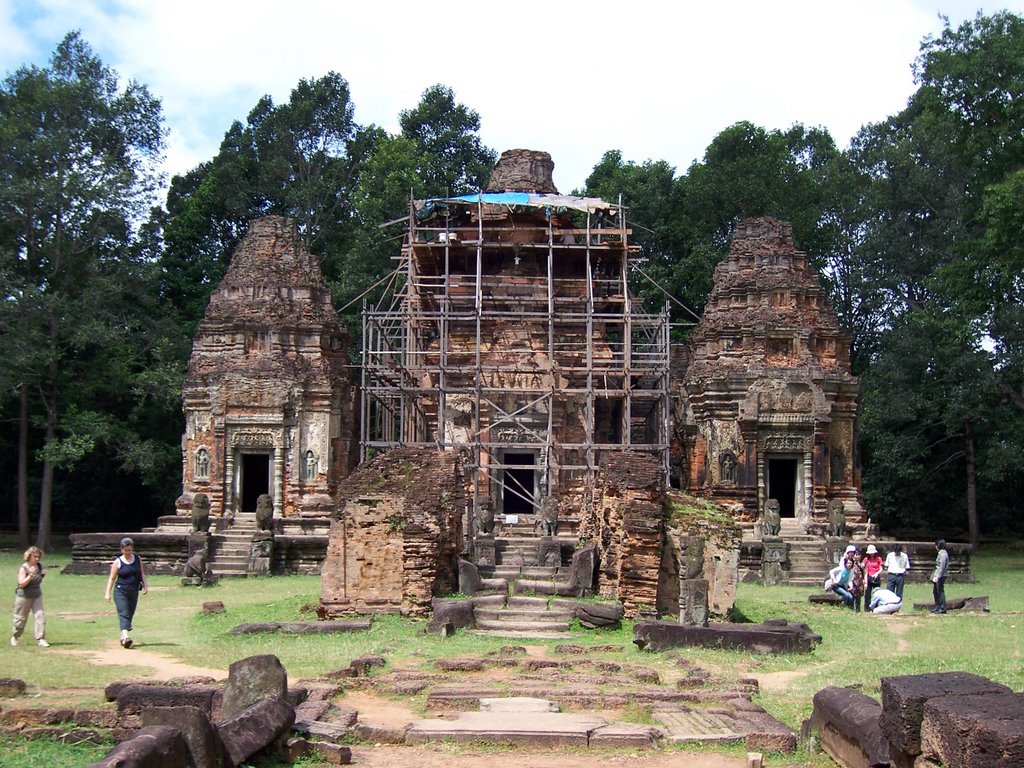 Preah Koh, Roluos Group, undergoing restoration work by archaeologists
Preah Koh was first on our itinerary, a late 9th Century C.E. temple built by the King Indravarman I. The Roluos group (like most Angkor sites) had a different name in ancient times and was called ‘Hariharalaya’. This site is unique in the sense that the temples and complexes have been built using baked clay bricks unlike the later, larger edifices that were built out of granite rock and laterite blocks. These bricks were covered with lime mortar. Pictures speak for themselves and I’ll keep my narrative short and simple.
 Nandi the bull and mount of Lord Shiva guarding the entrance to Preah Koh, Roluos Group
Next on the list, we went to the Bakong Temple complex, the early Angkor style of architecture is seen here. Built again by Indravarman I in the late 9th Century, this style prevails throughout the Angkor empire in all complexes built later on. The main temple tower is tall, built high up and this tower (gopura as it is called) is again meant to resemble Mount Meru, considered holy in Hindu mythology.
 View from top of the Bakong tower looking towards the entrance to the complex and the moat
 Bakong Temple, early Khmer style gopura architecture
 Bakong Temple from the entrance
Last stop in the Roluos group was Lolei, a small complex of brick construction in very dilapidated condition, supported by thick wooden pillars and supports to prevent the entire structure from falling.
 Lolei, in a dilapidated condition, unsafe to enter, matter of time before it all crumbles down
We then went to a site called Prasat Kravan, built by King Harshavarman I in the early part of the 10th Century C.E. This complex has been built with bricks, in perfect symmetry covered with Stucco plastering. A small portion of the original stucco covering has lasted through time. One must visualize that the entire exposed brick structure that exists today was covered entirely in stucco. This temple complex has the finest brick work carvings that I have ever seen, anywhere in the World during any period of time. The brick carvings depict Hindu deities such as Lakshmi the Goddess of wealth, Vishnu, Maheshwara (Shiva), Vishnu riding on his vehicle Garuda, all carved or preformed in baked clay bricks! Fantastic.
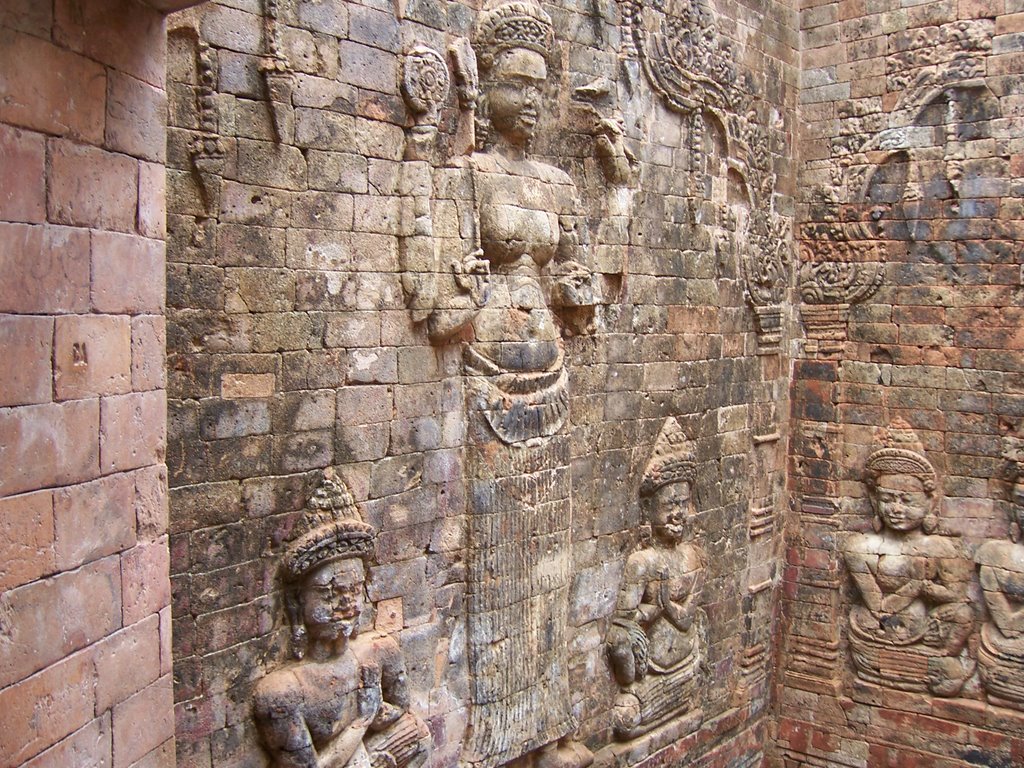 Depiction of Vishnu at Prasat Kravan, all clay brick carvings!
 The stucco covering remaining on a small part of the brick work at Prasat Kravan
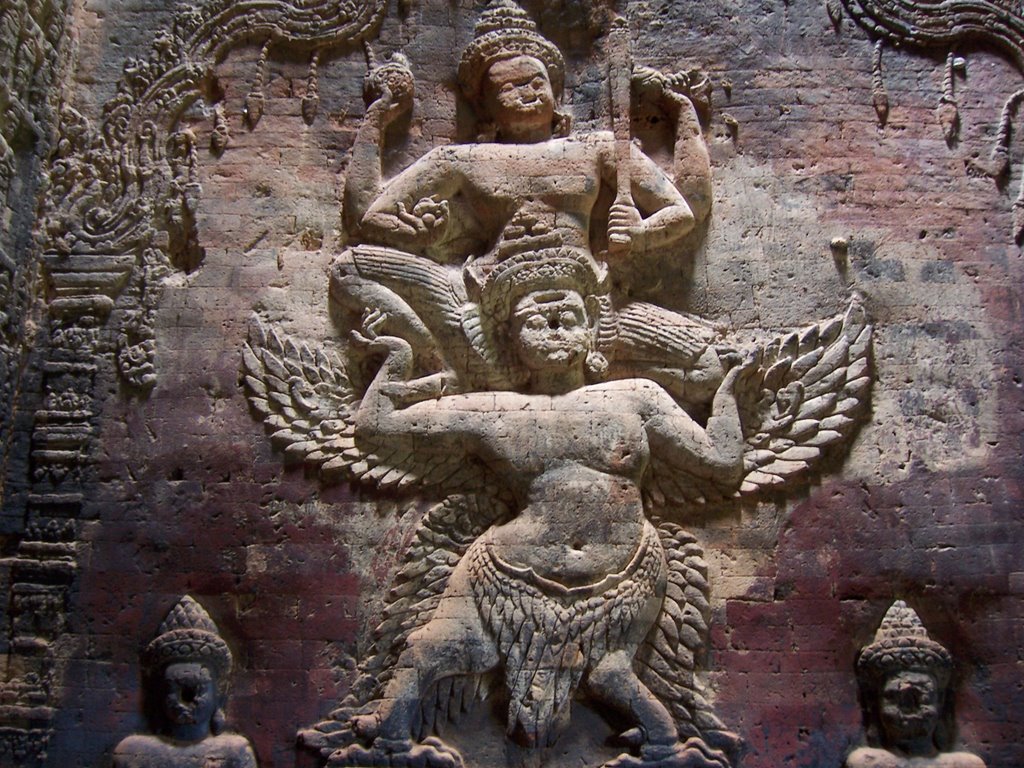 Depiction of Vishnu riding on Garuda, his vehicle, again made of clay bricks at Prasat Kravan
 Maheshwara, looking like a Lord of the universe, with representation of the 108 original hindu clans behind him, again made of clay bricks atPrasat Kravan
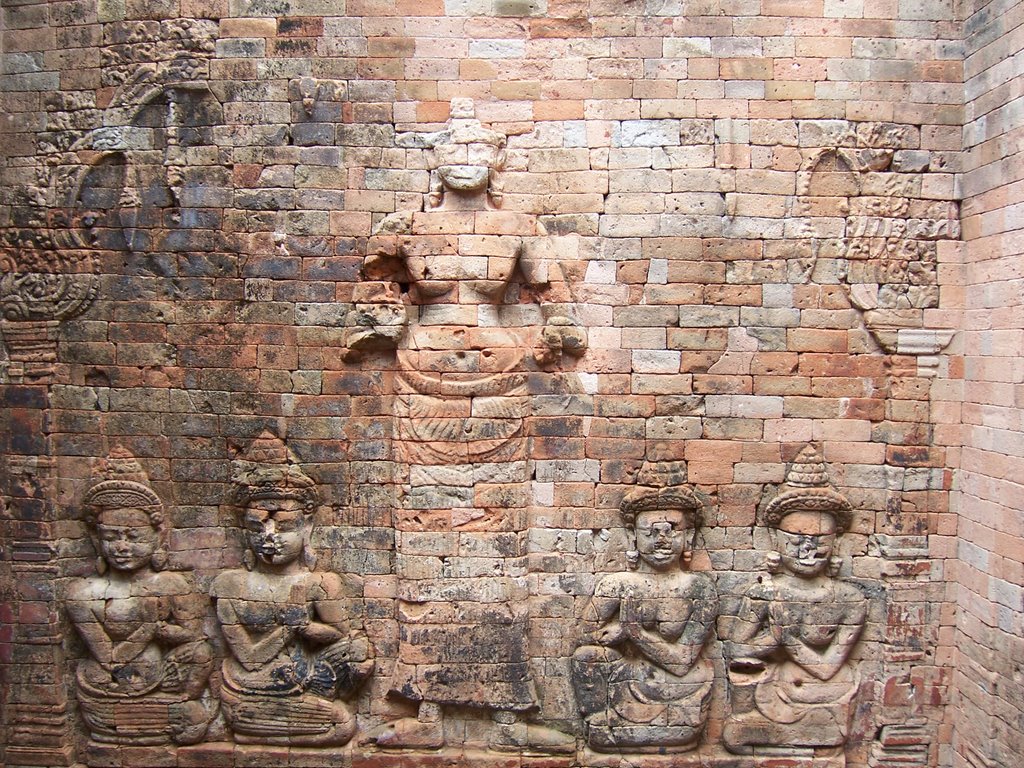 Depiction of Goddess Lakshmi, goddess of wealth, made of clay bricks at Prasat Kravan
Coming back towards Siem Reap and with less than half a day to spare and all worn out, we stopped at Bantey Kdei, a typical Angkorean architecture complex built during Jayavarman the VII sometime in the 12th-13th Centruy C.E.
Opposite Bantei Kdei’s entrance is the Srah Srang, a huge man made lake (700 metersX350 meters) that reportedly has had water in it for more than 900 years! This man made lake was actually the swimming pool built first in the late 10th Century during Rajendravarman’s time and possibly remodeled during Jayavarman VII. The inscriptions on the rocks give the details that this was meant as a pool for all creatures except Elephants. Maybe they had a bath somewhere else! It is typical for travelers to this area to end the day watching the sun set over Srah Srang. Typically we then head back to the hotel, a shower later, we are all making a bee line for Pub Street for some local beer and food.
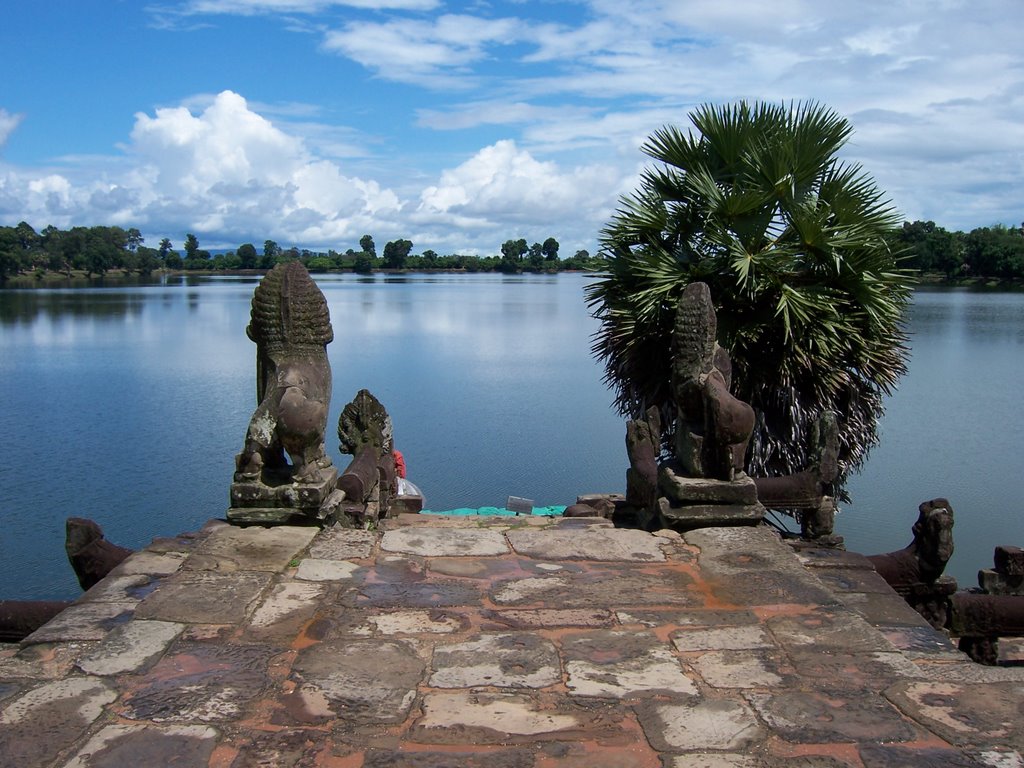 King's swimming pool at Srah Srang
The next day we went really out of town, the farthest that we had been out of Siem Reap, venturing out to the Phnom Kulen Mountains. These mountains are the origins of the Khmer rulers because it is here that they started their revolution of sorts. Cambodia and the Khmer people had been ruled by the Java Kingdom and early Khmer rulers overthrew them and came down to the plains to rule Cambodia and the rest, as they say, is history and the rich legacy they left behind in the form of all these innumerable temples and complexes. Up in the mountains, there is a stream that contains a thousand lingas (manifestation of Shiva) and also carvings on the stone river bed of Vishnu, goddess Lakshmi and Brahma the creator of the universe. This stream that ends up as a river is still called as a holy river because of the carvings of deities on the river bed. In the dry season, one can take pictures of it, but since we had caught the tail end of the wet season, the water was a bit too deep. While we could clearly see the carvings, it was tough to take pictures.
The stream ends up as a waterfall a little distance away and people stand under the falls to take a dip in the holy water. Phnom Kulen also has a large Buddha carved out of the top of a natural granite boulder. The Buddha is in a reclining position and they have built a temple on top of the boulder enclosing the carving.
We came down to the foot of the mountains for some lunch and we tried vegetarian Khmer style curry made and served in a coconut accompanied by some white sticky rice. Heaven is best described (by me!) as a place where one can eat good curry cooked and served in a coconut with the coconut meat still inside and eaten along with the curry, if one wishes!
Back in Siem reap, our resourceful driver took us to a handicraft school run by the Government, where the local people from different villages are brought, trained in Cambodian handicraft and sold in a showroom. We bought some silver made pelican and other small stuff.
Not wanting to waste time at pub street this early in the evening, we decided to drive to the Ton Le Sap Lake, the largest fresh water lake in Asia and take a boat cruise. This is a very interesting part of the trip, not having to see any temples and a good way to end the trip looking at how the local people live. The Ton Le Sap supports a population of boat people. I mean a whole village floats on the lake, I’m not kidding. We went past floating homes, floating schools, even a church, post office and administrative buildings.
Somewhere along the way, the village is separated by Cambodians and a floating village of Vietnamese people! It’s so weird. Anyway, the floating homes have dogs, cats and even floating pig pens. This is a ‘must see’ for anyone who wants to see how people live around here. It is an eye opener, the people living on the lake, washing in it, bathing in it, cooking with it and so on. The people here are of limited means and when you see them living such simple lives, one’s eyes really open to what’s going on in the World and how we think we have it so good. We ended the day drinking Angkor beer (what else?) on a floating restaurant that had some crocodiles breeding on site (it gets weirder, doesn’t it?).
Floating School below:Not wanting to waste time at pub street this early in the evening, we decided to drive to the Ton Le Sap Lake, the largest fresh water lake in Asia and take a boat cruise. This is a very interesting part of the trip, not having to see any temples and a good way to end the trip looking at how the local people live. The Ton Le Sap supports a population of boat people. I mean a whole village floats on the lake, I’m not kidding. We went past floating homes, floating schools, even a church, post office and administrative buildings.
Somewhere along the way, the village is separated by Cambodians and a floating village of Vietnamese people! It’s so weird. Anyway, the floating homes have dogs, cats and even floating pig pens. This is a ‘must see’ for anyone who wants to see how people live around here. It is an eye opener, the people living on the lake, washing in it, bathing in it, cooking with it and so on. The people here are of limited means and when you see them living such simple lives, one’s eyes really open to what’s going on in the World and how we think we have it so good. We ended the day drinking Angkor beer (what else?) on a floating restaurant that had some crocodiles breeding on site (it gets weirder, doesn’t it?).
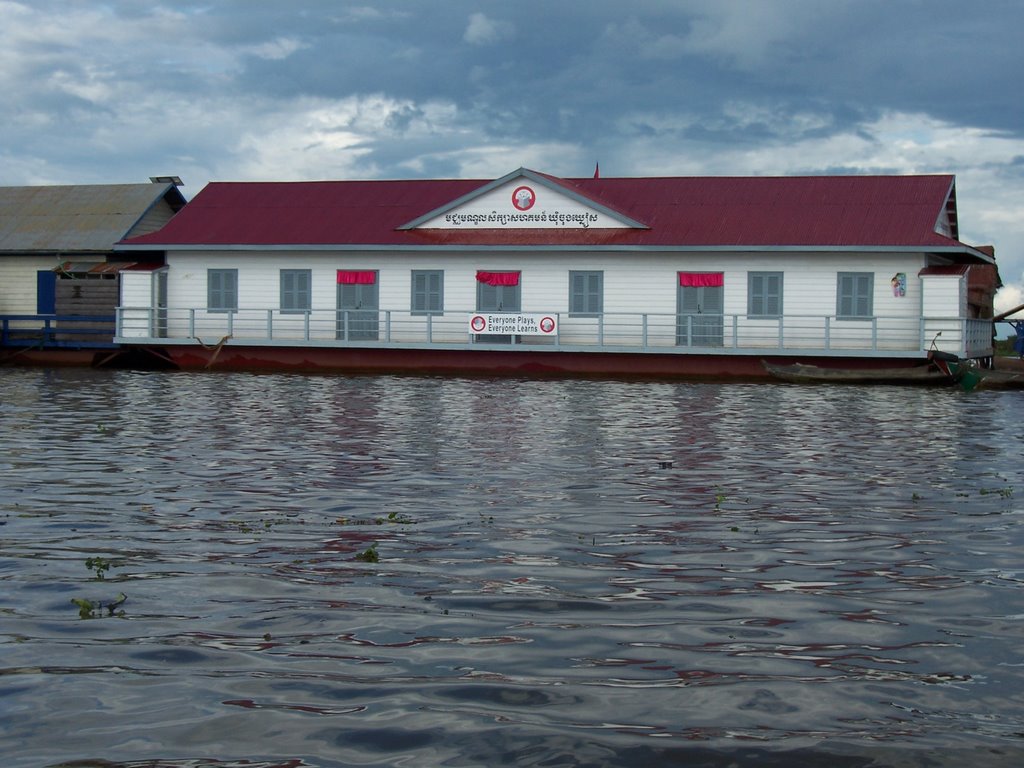 Floating Village on the Ton Le Sap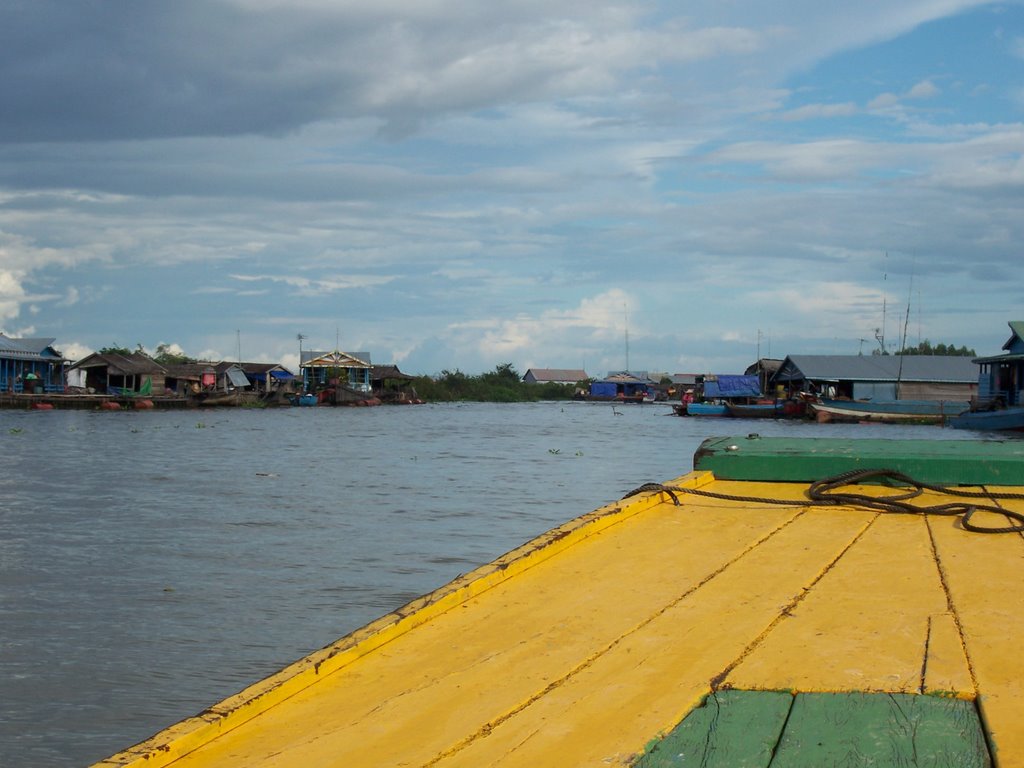
 Floating Church (left) and house (below)
The next day we spent relaxing, taking walks around Siem Reap town to the old market where we bought a fabulous hand made Bronze Garuda, some masks to hang on the wall back home, the masks resembling the face towers of Angkor Thom Bayon temple that I wrote about in my first article on this trip. I had to indulge in a oily Khmer style massage to bring life back to my limbs after nearly a week of intense traveling, climbing and sweating it out on the sites of Cambodia.
Pictures of the old market where one can bargain for local handicrafts and a place to browse
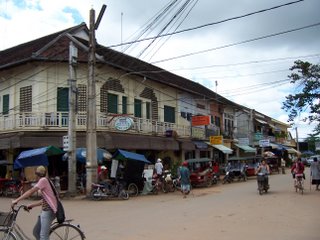
It would be shame to say that this is all about Cambodia, because it isn’t. While we covered most of the talked about sites and ones that the hordes of tourists don’t visit, we still have to go back to Cambodia. There’s still Phnom Penh, the capital city, to see. There’s still Sihanoukville to hang out, with its pristine (at least for now I heard) white sandy beaches in the Gulf of Thailand and maybe I’d also discover an unseen temple complex in the jungle like Indiana Jones. Maybe it will be the dry season and we’d be able to take the balloon up over the Angkor Wat complex, now that would be a sight. I’m really looking forward to the time that I can go back. This was my first trip there, for sure not my last!
Thanks for reading and hope you were able to travel through Siem Reap, Angkor Kingdom and through time with me on this trip. I'll try and post some pictures of us in Cambodia in a different topic. Watch for them!
Tuesday, November 07, 2006
MORE OF THE ANGKOR KINGDOM
This post continues from the last one, based on our trip to Siem Reap, Cambodia. There’s lot more to see than Angkor Wat and the Angkor Thom complex in Siem Reap. The first day had been hectic and we had covered lots. We decided to slow things down a bit since we had bought a $40 pass good for three days at all the temple complexes spread all over the place. There are shorter tours that one can take and not see everything on offer, but that’s not us.
The second day’s tour was beyond the main complex, starting from the Bantey Srei temple, and a good 32 kilometers away from Siem Reap town. The roads were not in great shape and the journey takes a bit longer because of this plus we had torrential rain coming down literally in buckets. Bantey Srei is located at the foot of the Kulen Mountains. This site is rather small but contains many rich and intricate stone carvings representing various stories in Hinduism. This temple was constructed by a Brahmin priest called Yajnavaraha who later reportedly became the guru of King Jayavarman V. He must have indeed been an influential chap to have had the kind of resources that are required for a sculpture rich site such as this one.
The second day’s tour was beyond the main complex, starting from the Bantey Srei temple, and a good 32 kilometers away from Siem Reap town. The roads were not in great shape and the journey takes a bit longer because of this plus we had torrential rain coming down literally in buckets. Bantey Srei is located at the foot of the Kulen Mountains. This site is rather small but contains many rich and intricate stone carvings representing various stories in Hinduism. This temple was constructed by a Brahmin priest called Yajnavaraha who later reportedly became the guru of King Jayavarman V. He must have indeed been an influential chap to have had the kind of resources that are required for a sculpture rich site such as this one.
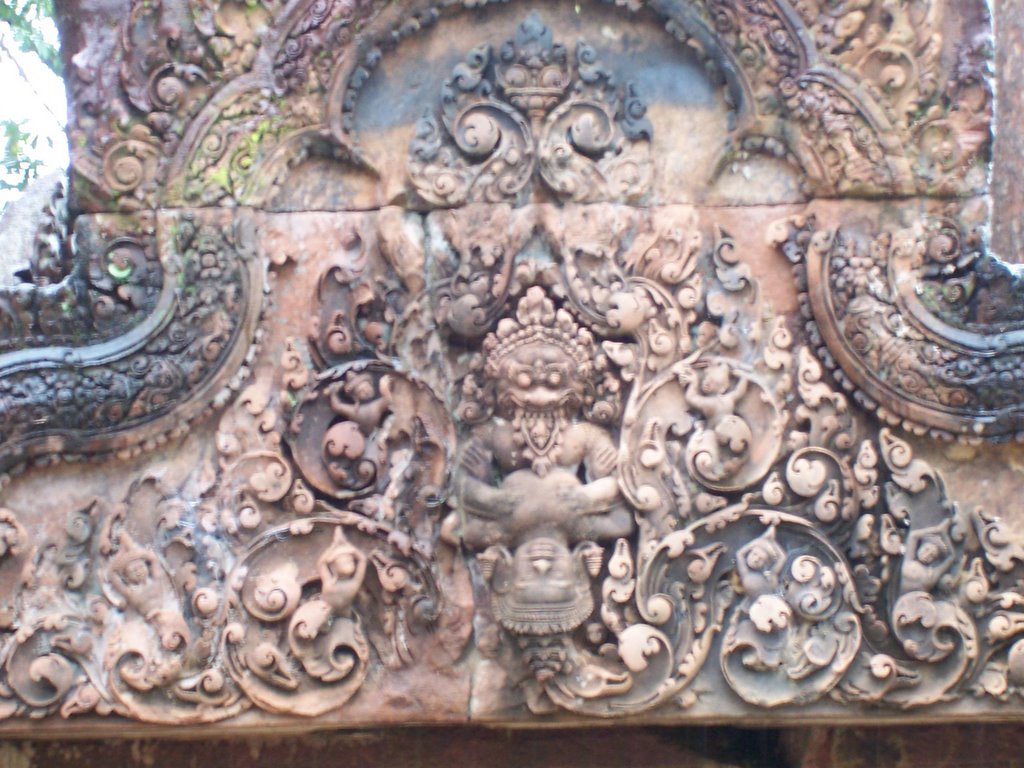 Narasimha (half man half Lion) tearing open the demon Hiranyakashipu's chest at Bantey Srei
This was one of the best sites for me, to see intricate carvings, from stories that I knew from Indian mythology, stories that we grew up with. Some of you may recollect stories that were told to us or read in comic books of Narasimha killing Hiranyakashipu, fight between Vali and Sugreeva that ends with Lord Rama vanquishing Vali and many other incidents, all stories carved out in pink sandstone.
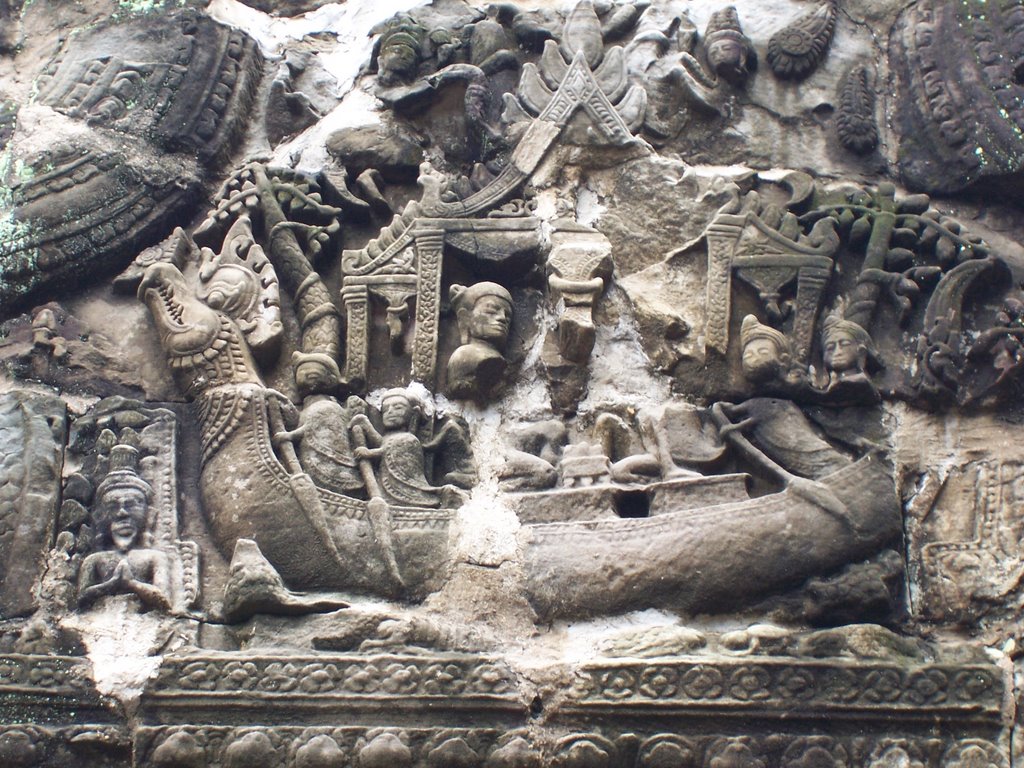 Sea Faring chaps, these Angkoreans, from a relief in Bantey Samre'
We spent the rest of the day visiting Bantey Samre’, Preah Kahn and Neak Pean (pronounced Puan). Bantey Samre’ was constructed early 12th Century C.E. by King Jayavarman II and is a typical Angkor style with the gopura or towers representing Meru Mountain and so on. This temple has some unique representations in the carvings such as the sun and moon deities, very large carvings of stories from the Ramayana including building the bridge between India and Lanka, saving Lakshmana after he is injured and so on.
 Pink Sandstone doorway carved with the Narasimha relief at Bantey Srei
For non Hindu readers, this may all sound completely confusing but bear with me, I will not go too deep into Hinduism or the philosophy connected with it. That’s too big a subject to handle in a blog, at least for me. It is sufficient to say that such detailed carvings of ancient Indian philosophy and mythology are almost never found anywhere in India. However, due to lack of awareness (I’d say) Indian tourists were absent. Our cabby told us that Indians were rare during any season. I’d also like to emphasize that one need not know about Hindu and Buddhist culture to appreciate the intricate carvings and architecture of the sites in Cambodia. All you need is a good eye for appreciating all things ancient and beautiful.
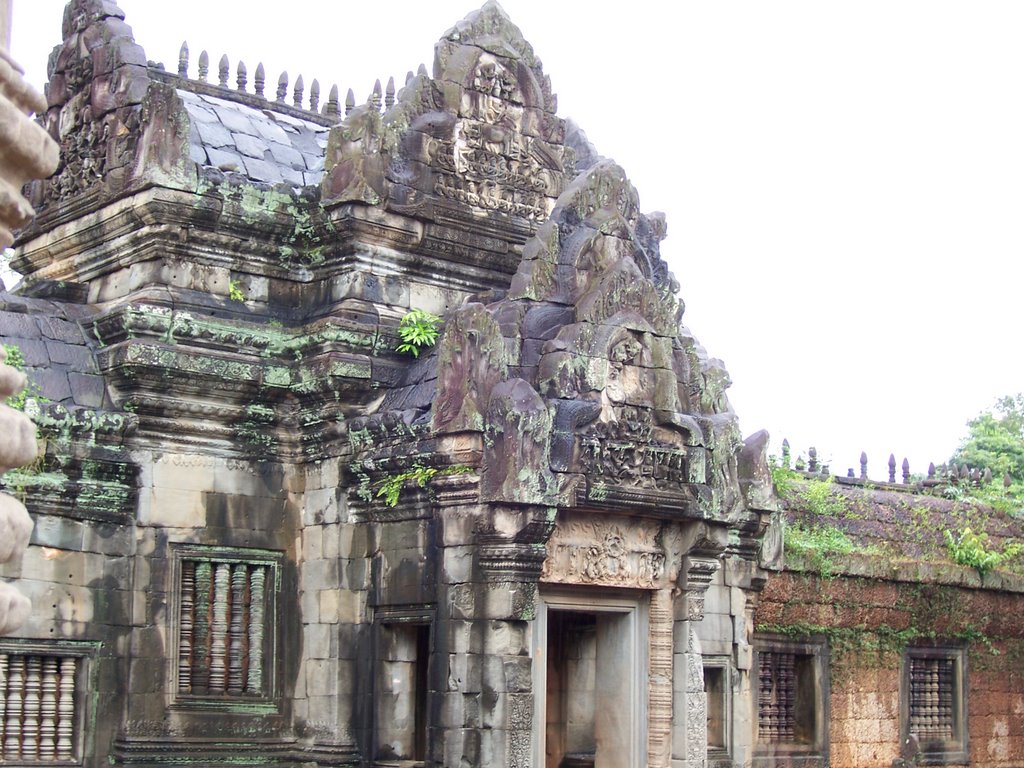 Bantey Samre' complex
Back to the subject of temples and Preah Kahn was next, built in the late 12th Century C.E. in the Bayon style by King Jayavarman VII and later additions by Jayavarman VIII. This is mainly Buddhist in nature and therefore you’d see a few Naga depictions common to Hindu and Buddhist sites and specifically stories centered on the life of the Buddha. This site was not just a temple but a Buddhist university with more than 1,000 teachers, according to the inscriptions found there. Later in the late 13th Century, this place reverted back to Hinduism and one can see giant 15 meter tall rock carvings of “Garuda” the mythical eagle that is known as the vehicle of Lord Vishnu. Garuda is seen clutching two serpents (his favorite food, of course!) and spreading his wings in delight. I saw a smirk on his beak, I swear it!
 All Angkor temples and sites are surrounded by a moat and during the wet season, these are full
 A two story structure at Preah Khan
 A photo that got here by mistake-from Ta Phorm Temple mentioned in the previous blog post
 The Garuda, mythical bird and vehicle of Lord Vishnu clutching two snakes, see the glee on his face! This was at the outer wall of Preah Khan complex, mentioned above.
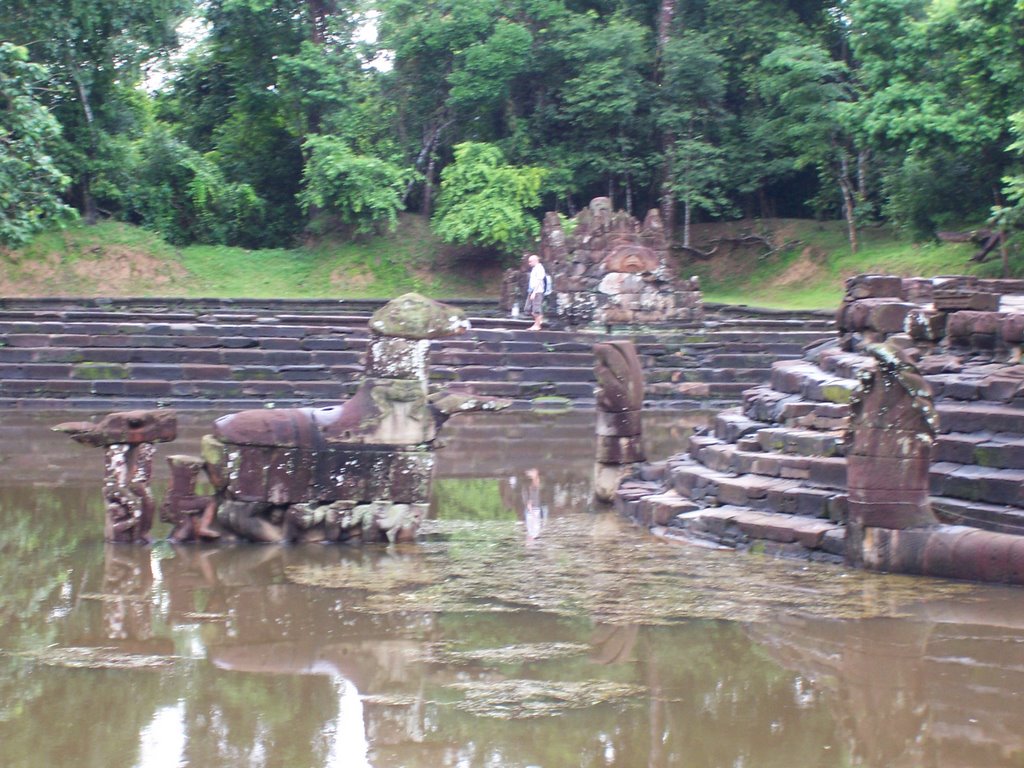 The Horse in the pond at Neak Pean
Neak Pean is unusual and it has a central square pond surrounded by square ponds on four sides. The small temple is in the middle of the pond. This place apparently used hydraulics to create a fountain of sorts. It started out as a Hindu concept and structure but changed to add Buddhist ideas and motifs in the temple. One can see a large stone flying horse (unfinished) in the central pond and when observed closely, one can see people hanging on to the horse, even at its tail. This is based on a Buddhist story where a Bodhisattva took the form of the horse called Balaha and rescued sea faring merchants from an Island that was ruled by an Ogress!
After finishing visiting all the sites, we went back to Siem Reap and wandered around town mainly around an area known as “Pub Street” where all foreigners hang out to have a drink and eat. Some of these “pubs” have live performances of local dances based again on Hindu Mythology and it’s good to see them. Some of these places offer free performances so long as you stick around and drink something. The local dances are commonly known as “Apsara” dances, named after the beautiful Apsara women that are thought to inhabit heaven! Apsara carvings dominatemany of the Angkor sites, in various dance positions.
 Another tree growing out of the temple at Ta Phrom complex mentioned in my last blog
There are lots more temples, complexes, photos and even mountains and rivers on this trip and they’ll be featured in my next piece and I’ll call that “Roluos and Kulen Mountains” because that’s where we went next. Those temples pre-date the Angkor period and is actually the origin of the empire. It’ll also have a bit more about Siem Reap and boating on the Ton Le Sap Lake as well.
Wednesday, November 01, 2006
SIEM REAP, CAMBODIA
Literally Siem Reap means Siam Defeated, based on a war that the ancient Khmer civilization of Cambodia had with the Thai kingdom. Siem Reap today stands as the gateway town to the World famous, UNESCO World Heritage site of Angkor Wat and all the other numerous temples, complexes and archaeological sites of the Angkor dynasties.
We took a vacation to Cambodia recently, spending five full days there. We left Singapore, having paid for a really cheap air ticket on JetStar from Singapore having made reservations at Angkor Star hotel, a nice air-conditioned three star variety, also for a song. We flew in early morning over thick jungles and Asia’s largest fresh water lake called Ton Le Sap. The season was just right; we caught the tail end of the lean season that also happened to be the tail end of the monsoon season as well. Perfect timing indeed.
Getting in through Siem Reap International Airport, a really nice local architecture based complex, was a piece of cake. Visa was on arrival, one needs to pay $20 bucks for it and submit a photograph and fill up a form. We did not find that tedious at all. We took a cab into town and the driver was so good that we hired him for the rest of the trip to take us around. The cabs are generally used Toyota’s that are air conditioned. Costs $25 per day and nothing extra and worth it. Budget travelers may opt for the Tuk Tuk, a different version than the ones you’d find in Bangkok.
Getting in through Siem Reap International Airport, a really nice local architecture based complex, was a piece of cake. Visa was on arrival, one needs to pay $20 bucks for it and submit a photograph and fill up a form. We did not find that tedious at all. We took a cab into town and the driver was so good that we hired him for the rest of the trip to take us around. The cabs are generally used Toyota’s that are air conditioned. Costs $25 per day and nothing extra and worth it. Budget travelers may opt for the Tuk Tuk, a different version than the ones you’d find in Bangkok.
 Angkor Thom South Entrance
The first day we managed to visit Angkor Thom, the Bayon temple, Bapuon and the Phimeneakas. These were built in the late 12th Century C.E. by Jayavarman the VII. Details of these sites may be found on various websites and a book that is locally available called “Ancient Angkor”.
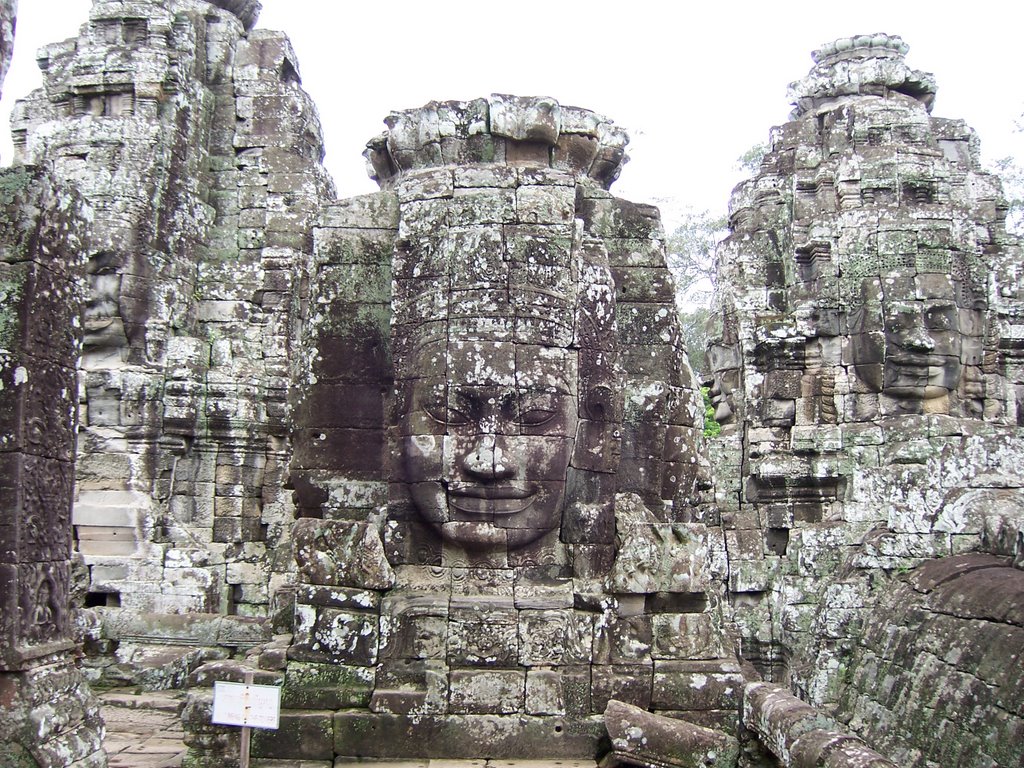 The "Face Towers"
Angkor Thom is the famous temple complex having the “face towers”. The Angkor kings started by being Hindu religion dominating Cambodia and this is evident from all the intricate stories of the Ramayana and some Mahabharata and other Hindu mythology carved in stone at various Angkor temples and sites. Buddhism replaced Hinduism in later years and today Cambodia is mostly a Buddhist country. One can see that their art, crafts, dances and culture is still rooted in Hinduism and stories that figure in Hinduism.
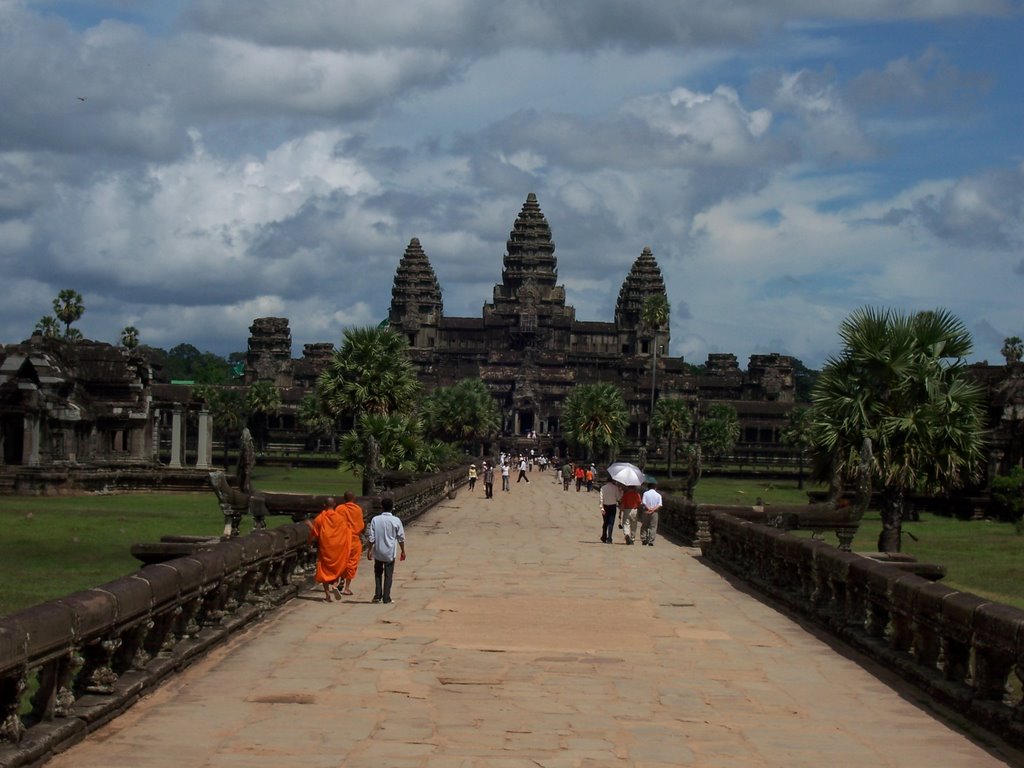 Angkor Wat Complex
We went next, to the Ta Phrom Temple, where Indian Archaeologists, still working at the site, have managed to push back the jungle. It is this spot that is featured in movies, simply because of the massive silk-cotton trees that literally grow out of the stone monuments as one can see from the pictures. I’ve seen similar trees growing out of stone “temples” on the other side of the World at the Copan Ruinas in Honduras, those being the remains of an ancient Mayan Civilization. Striking similarities between two different civilizations or maybe it’s my perception and a theory that perhaps ancient civilizations had some contact between them. The aliens from space built all this, in my opinion (Just a joke!!!).
 Ta Phrom Temple Complex with the Silk-cotton Trees growing out of the stone complex
 The Phimeneakas, Kings Palace, Angkor Thom
The entire afternoon we spent at Angkor Wat temple, the World’s largest religious complex. This huge edifice was built with a huge moat surrounding it. All Angkor kingdom sites have moats surrounding the temples and complexes. Angkor Wat can be grueling, especially on a hot afternoon. This is perhaps the best time, though, since most tourists are away. The huge complex needs a lot of time, a lot of climbing very steep steps.
Angkor Wat was constructed in early 12th Century (between 1113 and 1150 C.E.) with later additions. The towering temples are massive and the central tower or “gopura” represents the holy Hindu mountain called Mount Meru, symbolizing the centre of the universe in Hindu mythology. Later additions included Buddhist relief’s and a hall called the “hall of a thousand Buddhas”, self explanatory!
I’ve got to continue the rest of the story in the next blog piece. The downside of visiting Cambodia is the street kids and adults who want to sell you everything (except Angkor Wat!) and almost everything is quoted at $1. I suppose that is typical of any developing country. But, the people are very nice, friendly and always smiling and the upside to visiting Cambodia and Siem Reap is far greater than the downside. Actually, I should not even call this a down side.
We had loads of fun in this country and will definitely go back and I will recommend all those with or without interest in history and archaeology, to visit the country, it’s worth the trip, every cent of it. More details of the other sites and our experiences in the next blog piece, I’ll call that piece “Beyond Angkor Wat”.
Monday, September 25, 2006
GLASS COCKPIT JET
Athul, one of my readers prompted me to put this post up and as promised earlier, I have posted pictures of the Premier 1 jet that got delivered to India with the Indian flag. I am instrumental in being the first to bring this Aircraft in Indian flag colours for commercial charter operations in India. I am sure some of my compatriots are proud.
 Me at front door, see Indian flag above
 Me on the acceptance flight day
 Glass cockpit Proline 21 avionics
 Me at front door, see Indian flag above
 One high tech jet for India
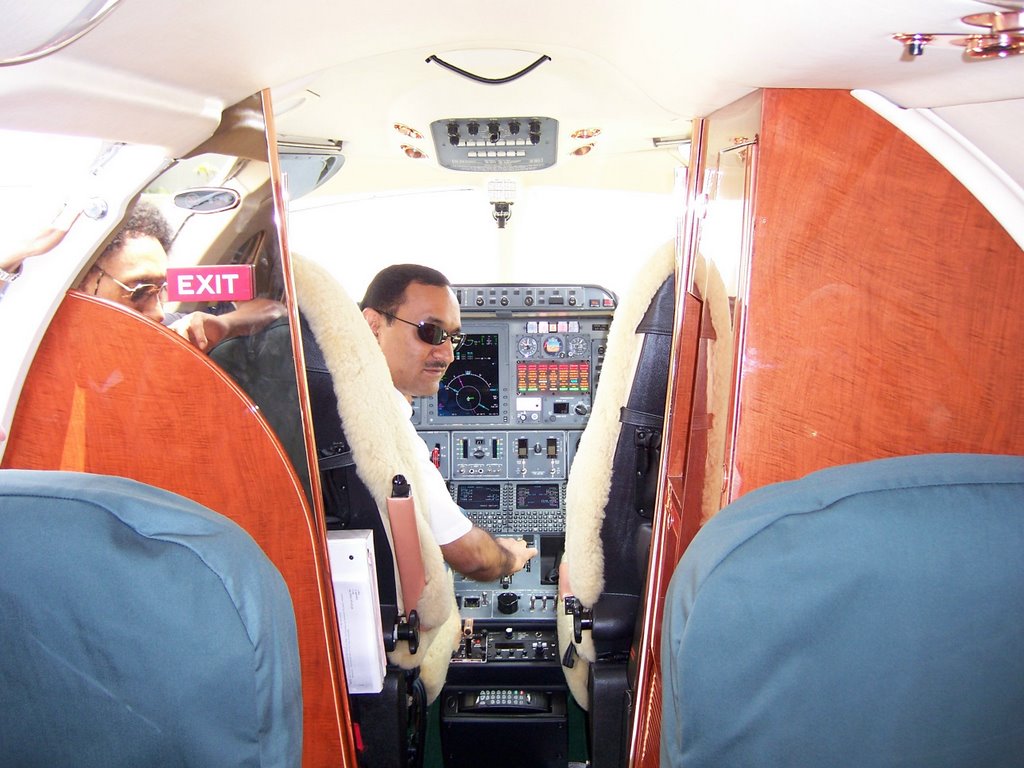 Me on the acceptance flight day
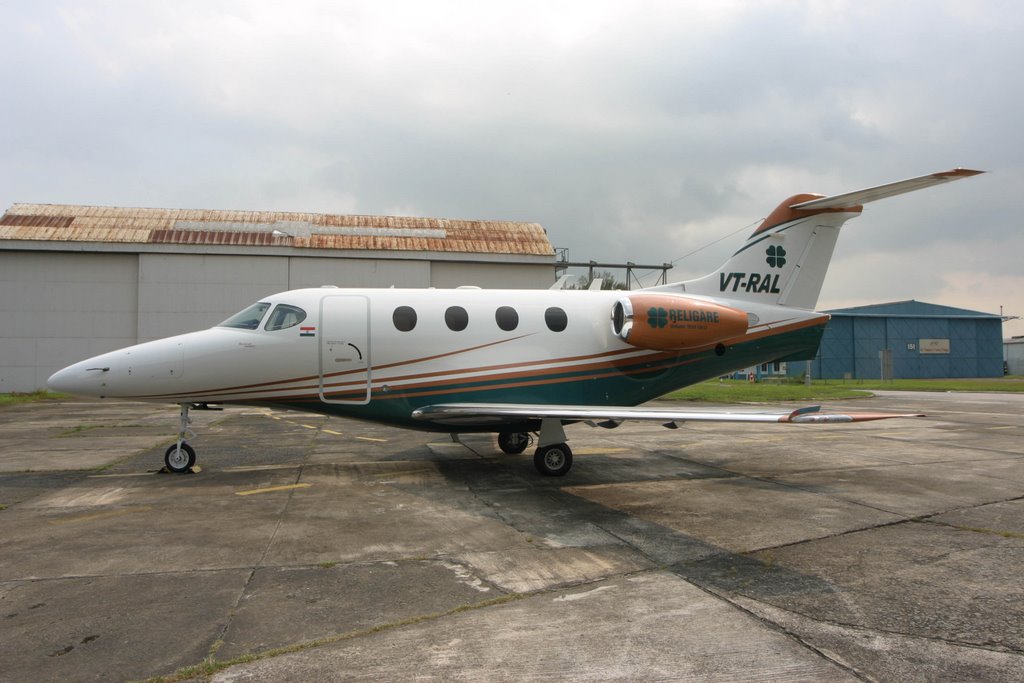 The Premier 1-at 0.78Mach, she's the fastest civillian in the skies here
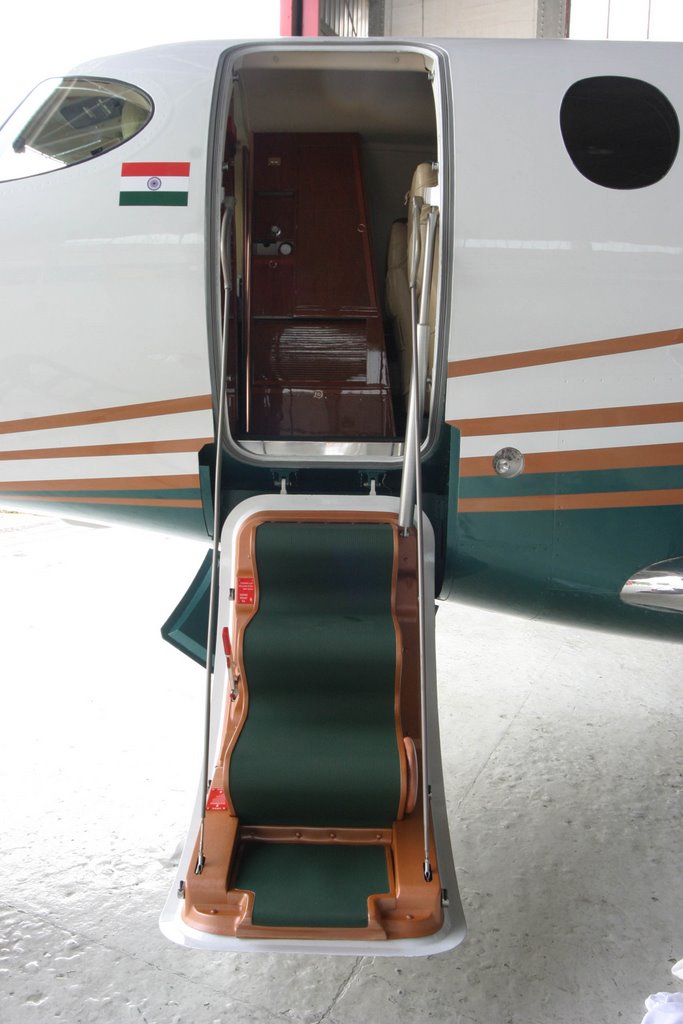 View of the front steps and the galley inside
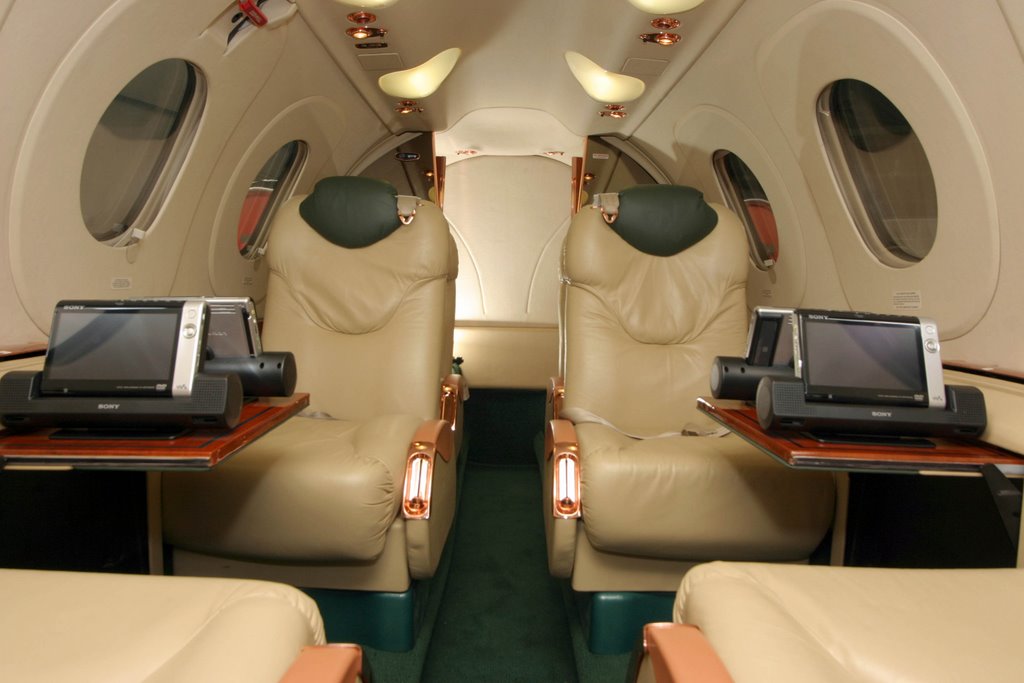 Plush Interior with club seating and personalized DVDplayers
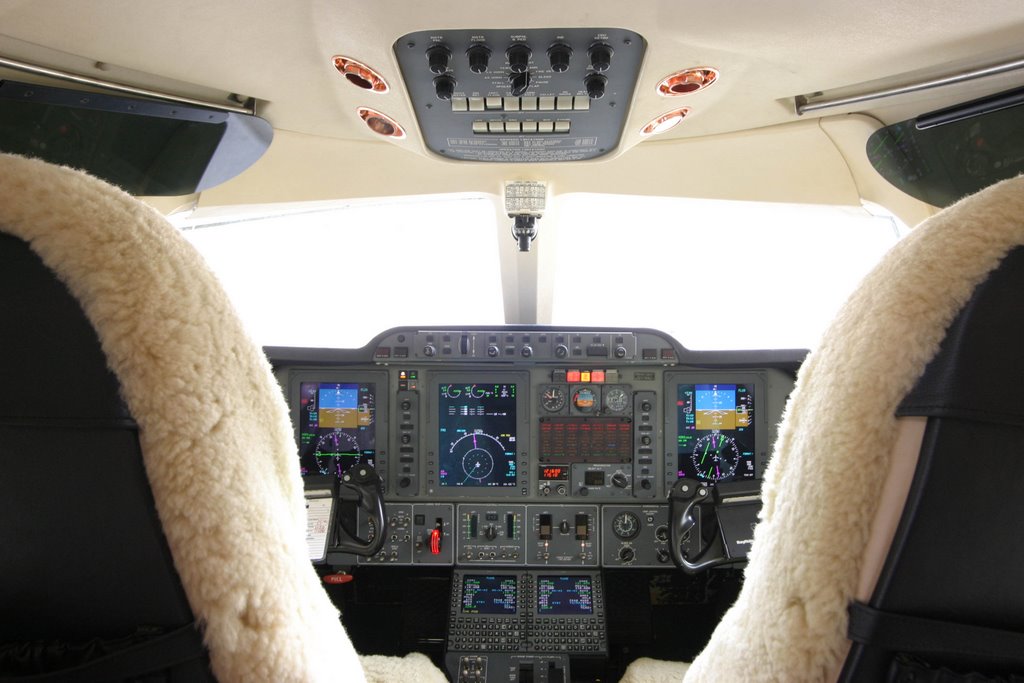 Glass cockpit Proline 21 avionics
Hope these pictures, long awaited by some, are illustrative of a modern jet. India's market for such jets and turboprop executive Aircraft is growing at a fast pace. I am fortunate to be a leading player in facilitating such Aircraft. There are two more turboprop new generation executive Aircraft here in Singapore that I am customizing. I'll post pictures of those as soon as possible. I am doing the acceptance test flight of one of those Aircraft next week. Some of the top corporates in India are buying more such jets and larger ones too and as I deal with them, there will be photos and details of those Aircraft as well. Look forward to more.
Wednesday, September 20, 2006
MORE AIRSHOW FORMATION PICTURES

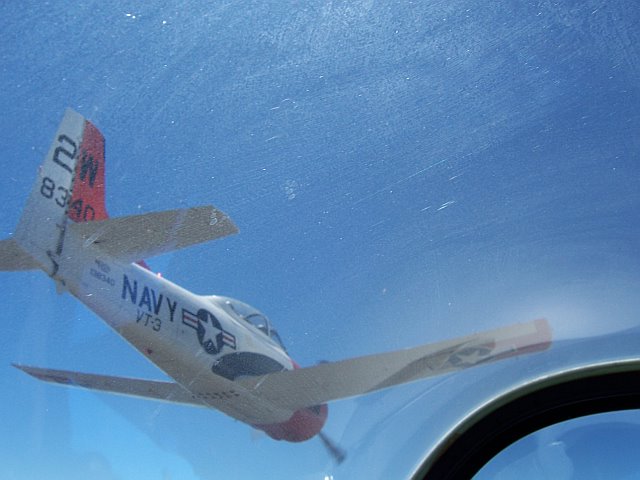
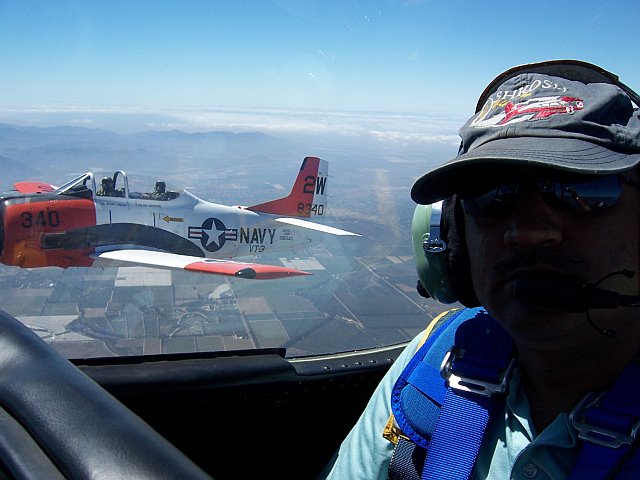
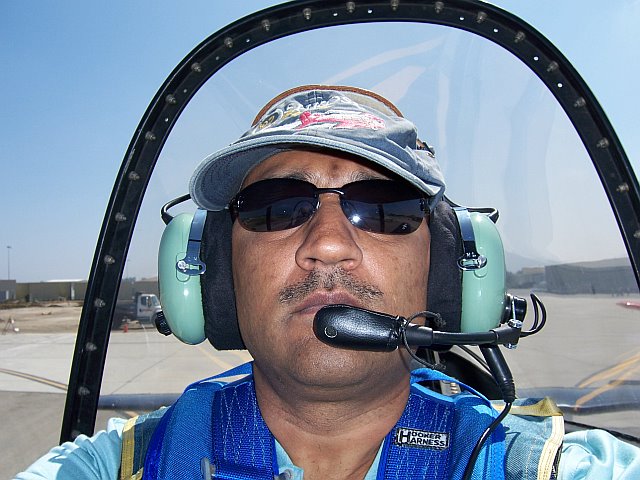
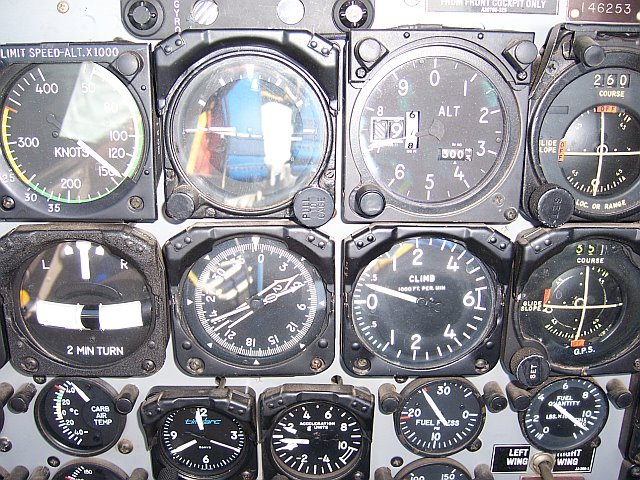
Thats me in the pix. Some of these pictures that I took appeared recently in "BangaloreBias" a new eveninger in Bangalore, India. These are all pictures of the T-28 formation flights that I took part in Camarillo and wrote about, in the previous article. There's a picture of my cockpit instruments, look closely and you'll see 9,500 feet, that where we did the practise runs and manoeuvers.
Update on the Premier 1 fastjet. It was delivered to us last week and is now in New Delhi, India. The photos of that airplane in our colors will form the next topic of my blog. I will also publish photos of the all glass cockpit with the most modern avionics in the World. That should delight some of the previous commentators who were interested in visiting an airplane cockpit to see whatit looks like. The Premier 1 instrumentation is nothing like the "steam gauge" ones you see above.
Tuesday, September 05, 2006
RSAF OPEN HOUSE
I got back to Singapore from California late last week. I test flew our latest Premier 1 executive jet yesterday and I will put a post soon enough, on that. Thats also one of our five Aircraft, two more here in Singapore getting ready. More on that later.
The second day after my return, the Republic of Singapore Air Force (RSAF) had an open house for the general public at Paya LabarAir Base. I'd always turn up at any aviation event, so here I was, camera in hand. I have ex-RSAF personnel who used to operate some of the "heritage" Aircraft they had on display. The RSAF is well equipped with the latest transport, fighter and helicopters. In this small post of mine, I have put some of the pictures of the open house. 
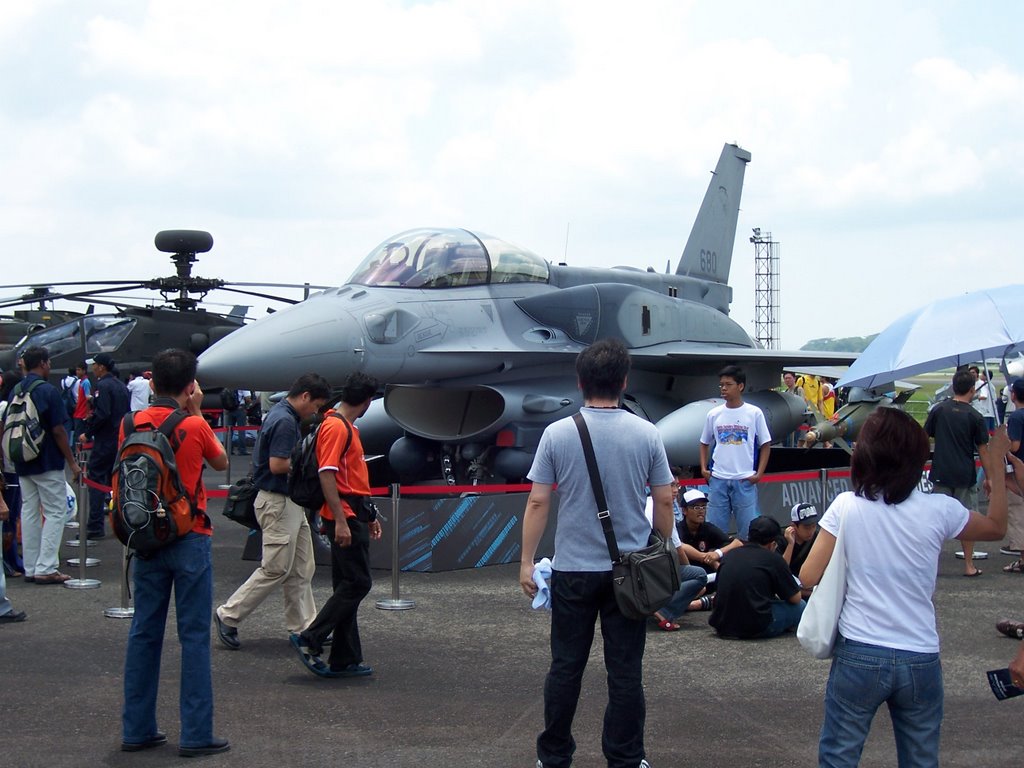
An F-16 on display
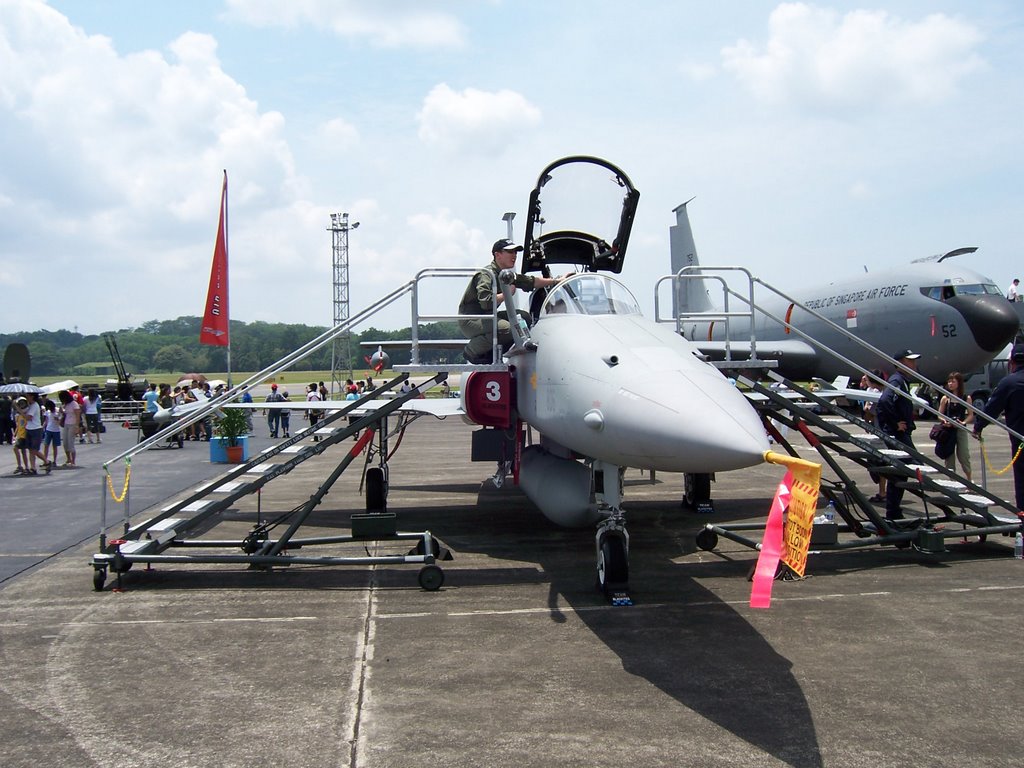 F5E
F5E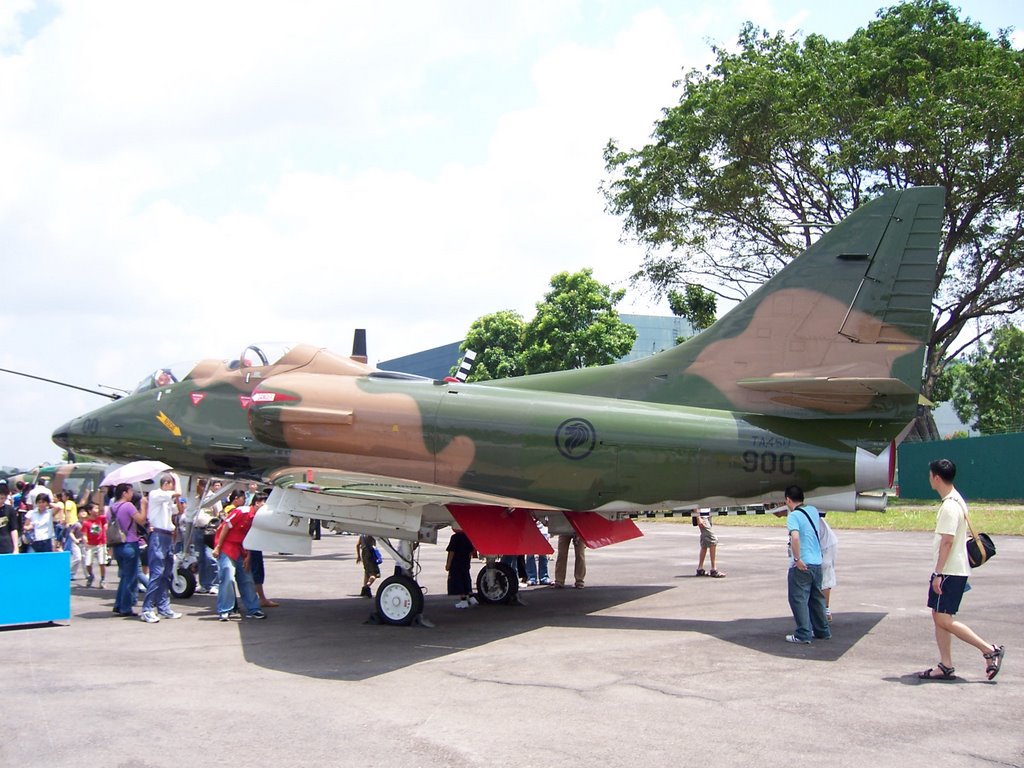 "Heritage" Skyhawk near the entrance to the open house
 Beoing Chinook twin rotor helicopter transport
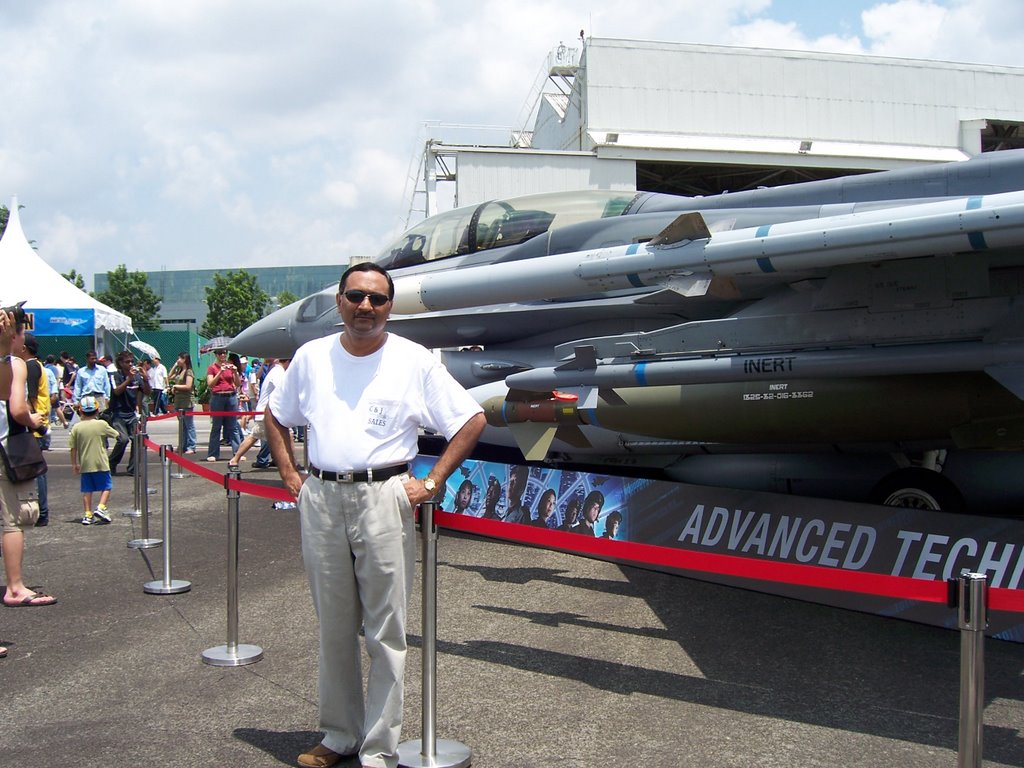 Your's truly in front of an F-16, this will tickle my detractors!
All Aircraft were open for visits by people, they could walk into the Aircraft and see the cockpit as well. Some of the Aircraft included the F50 and Hercules C130 transport, a large B707 transport, F-16's, E3C Hawkeye, F5E and so on. Lucky draws were held and the winners were treated to a flight on board the helicopters and transport Aircraft.
There were hangars meant for young aviators to learn more about aviation and the RSAF, there were hangars with static displays and of course, a food court in an airconditioned hangar. The Singaporeans think of everything. It's great to see Aircraft flying and the open day was for two days of the weekend. Free busses were arranged to transport people back and forth from the nearest MRT (Mass Rapid Transit) system. This is something that I wish our people would learn from (you know who I mean) instead of being just crabs!
Subscribe to:
Posts (Atom)